The bono por hijo (legally the "bonus per child for women") is a state contribution that increases the pension of mothers from age 65. It was created by the pension reform in Law 20,255, articles 74 to 79, and it is not a cash payment: it is deposited into the pension fund (AFP) account or added to the Universal Guaranteed Pension (PGU). Its amount starts at 10% of 18 monthly minimum wages for the month each child was born, plus a return, so today it is worth between CLP 297,000 for each child born before July 2009 and CLP 996,395 for a child born since May 2026, before interest.
View the data as a table
| Child born before Jul 2009 | $297,000 |
| Child born since May 2026 | $996,395 |
| Minimum wages counted | 18 |
| Age at which it is paid | 65 years |
How the bono por hijo is calculated
Article 75 of Law 20,255 sets the formula in two steps. First, the base amount: 10% of 18 monthly minimum wages, the one for workers aged 18 to 65, in force in the month of the child's birth. In other words, 1.8 times that month's minimum wage. Second, a return for each full month is applied to that amount, from birth until the month the mother turns 65. The rate is the average nominal annual return of all AFP Type C funds, net of fees (excluding the disability and survivors' insurance portion).
There is a special rule for children born before July 1, 2009, when the benefit began: the twenty-fourth transitional article says their bonus is calculated with the minimum wage in force on that date, CLP 165,000 (Law 20,359), and the return runs from July 2009. So all mothers with children born before that date start from the same base: CLP 297,000 per child. That figure explains why some outlets speak of a "CLP 165,000" bonus: they confuse the 2009 minimum wage with the bonus.
| Child born | Minimum wage that month | Base bonus (1.8 times) |
|---|---|---|
| Before Jul 1, 2009 | CLP 165,000 | CLP 297,000 |
| From May 2022 | CLP 380,000 | CLP 684,000 |
| From Aug 2022 | CLP 400,000 | CLP 720,000 |
| From Jan 2023 | CLP 410,000 | CLP 738,000 |
| From May 2023 | CLP 440,000 | CLP 792,000 |
| From Sep 2023 | CLP 460,000 | CLP 828,000 |
| From Jul 2024 | CLP 500,000 | CLP 900,000 |
| From Jan 2025 | CLP 510,636 | CLP 919,145 |
| From May 2025 | CLP 529,000 | CLP 952,200 |
| From Jan 2026 | CLP 539,000 | CLP 970,200 |
| From May 2026 | CLP 553,553 | CLP 996,395 |
Source: article 75 and the 24th transitional article of Law 20,255; 2009 minimum wage per Law 20,359 and 2022-2026 per Previred indicators; Pauta Financiera calculation. Children born between July 2009 and April 2022 use the minimum wage of their birth month, which we do not include in the table. We explain the current minimum wage and its adjustments in the 2026 minimum wage.
View the data as a table
| Base bonus | |
|---|---|
| May 2022 | $684,000 |
| Aug 2022 | $720,000 |
| Jan 2023 | $738,000 |
| May 2023 | $792,000 |
| Sep 2023 | $828,000 |
| Jul 2024 | $900,000 |
| Jan 2025 | $919,145 |
| May 2025 | $952,200 |
| Jan 2026 | $970,200 |
| May 2026 | $996,395 |

Does your pension fund, insurer or welfare fund want to reach people planning their pension? See Pauta Financiera's formats.
See advertising optionsHow much the bono por hijo can be worth: two examples
The return is set by the IPS using that of the Type C funds, which changes every year, so an exact amount cannot be given in advance. To show the order of magnitude, we apply three illustrative scenarios of nominal annual return (3%, 5%, 7%), which are not the official rate. The effect is that of compound interest: the more years between the birth and the mother's 65th birthday, the more the bonus grows.
- Example A: a mother who turns 65 in November 2026, with a child born in 1990. The base is CLP 297,000 and it earns returns from July 2009, about 17.3 years.
- Example B: a 30-year-old mother with a child born in May 2026. The base is CLP 996,395 and it earns returns for 35 years, until she turns 65.
| 3% | 495,756 | 2,803,720 |
| 5% | 691,891 | 5,496,132 |
| 7% | 959,567 | 10,638,097 |
At 5% a year, the bonus in example A reaches about CLP 691,891 per child and in example B CLP 5,496,132, in pesos of that time (inflation eats part of the growth). A mother with three children born before 2009 gets three bonuses. To see how much Type C funds have actually returned in recent years, check AFP returns in 2026.
Bono por hijo requirements in 2026
Under articles 74 and the 24th transitional article of Law 20,255, the woman must meet all of these conditions:
- Be 65 or older and have retired on or after July 1, 2009.
- Residence: at least 20 years in Chile, continuous or not, since age 20, and 4 of the last 5 years before applying.
- Pension system: be affiliated only with the AFP system (DL 3,500), or receive the PGU without belonging to another system, or receive a survivor's pension without belonging to any system.
- Children: one is paid for each child born alive; also for adopted children, in which case both the biological and adoptive mother can apply (article 78).
Women affiliated with other systems are excluded, for example the old pension funds administered by the IPS or the Armed Forces systems, except for the PGU or survivor cases described in the law. If you receive the PGU, the bonus increases it: we explain amounts and requirements in the 2026 PGU.

When and how the bono por hijo is paid
The bonus is not handed over in cash or as a lump sum. Article 76 of Law 20,255 sets three paths depending on the mother's situation:
| Situation | What happens to the bonus |
|---|---|
| AFP member | It is deposited into her individual account the month after she turns 65 and increases her pension under the option she chooses. |
| Receives PGU and is not affiliated | The IPS calculates a reference self-funded pension using the bonus as the balance, and that result increases the PGU. |
| Survivor's pension, not affiliated | It is calculated as in the previous case and the amount is added to the PGU she is entitled to. |
For AFP members, the bonus becomes pension under the option the mother chooses: programmed withdrawal or life annuity, whose differences we review in life annuity vs. programmed withdrawal. To claim it, the mother must apply to the IPS (article 77), which determines the amount.
- 2008Law 20,255 creates the bonusPension reform: 10% of 18 minimum wages per child.
- Jul 1, 2009The benefit startsMinimum wage of CLP 165,000: CLP 297,000 base for children born earlier.
- 2022Law 21,419 links it to the PGUPGU beneficiaries add the bonus to their pension.
- May 1, 2026Minimum wage of CLP 553,553Base bonus of CLP 996,395 for children born since then.
Common myths and mistakes about the bono por hijo
- "It is a CLP 165,000 bonus." False: CLP 165,000 was the minimum wage in July 2009. The base bonus for a child born before that date is CLP 297,000, plus interest.
- "You collect it when the child is born." No: the law pays it when the mother turns 65; until then it only accrues returns.
- "It is the same as the CLP 30,000 per-child bonus." No: that is a different benefit, paid directly and with different requirements.
- "Only one child counts." False: one bonus per child born alive or adopted is paid. With three children born before 2009, the base adds up to CLP 891,000.
The bonus adds to the mother's balance but does not replace it: years of contributions, the AFP and the chosen fund weigh far more in the final pension. If you are comparing pension funds before retiring, we review fees and returns in the best AFPs of 2026. The calculation rule is the same for everyone, though: the bonus's return is the average of all AFPs' Type C funds, not that of each member's fund.
Frequently asked questions about the bono por hijo
How much is the bono por hijo in 2026?
The base is CLP 297,000 per child born before July 2009 and CLP 996,395 per child born since May 2026; Type C fund returns are added until the mother turns 65.
Is the bono por hijo paid in cash?
No. It is deposited into the AFP account or increases the PGU or survivor's pension; it shows up in the monthly pension.
At what age is it received?
From age 65: for AFP members, the month after turning 65.
Do men receive it?
No. The law defines it as a bonus per child for women.
Where do you apply?
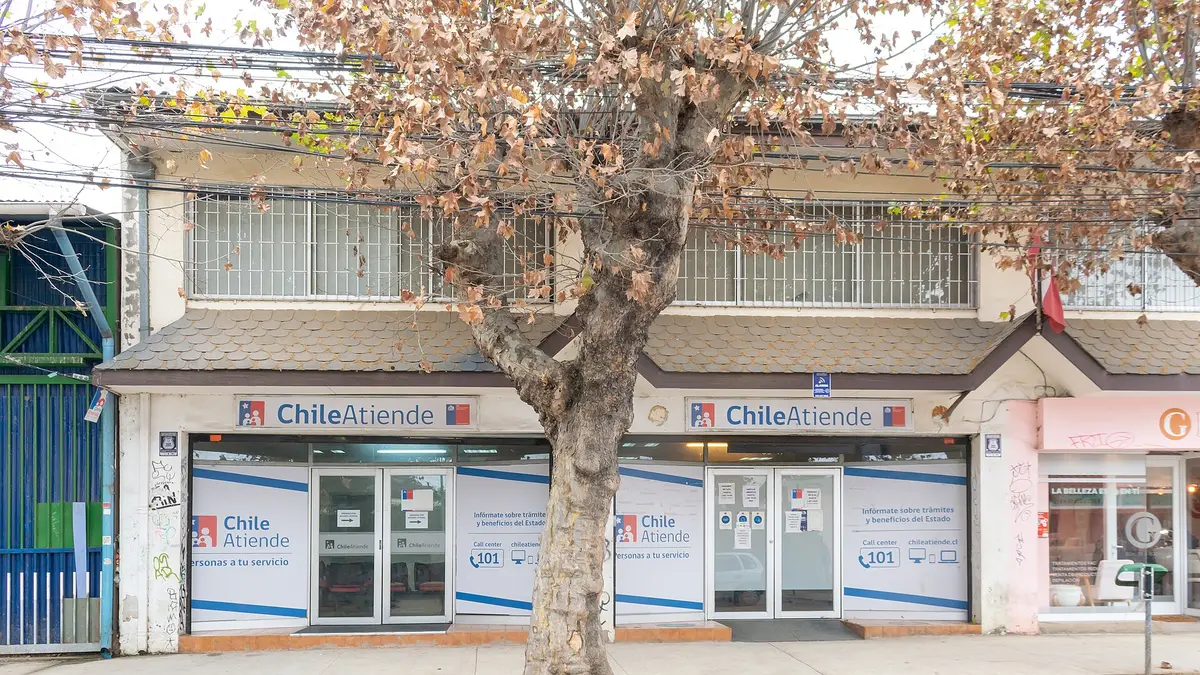
With the Social Security Institute (IPS), which serves the public at ChileAtiende branches; the AFP also guides the process at retirement.
This information is journalistic and educational, not pension advice. Confirm your case with the IPS or your AFP.