
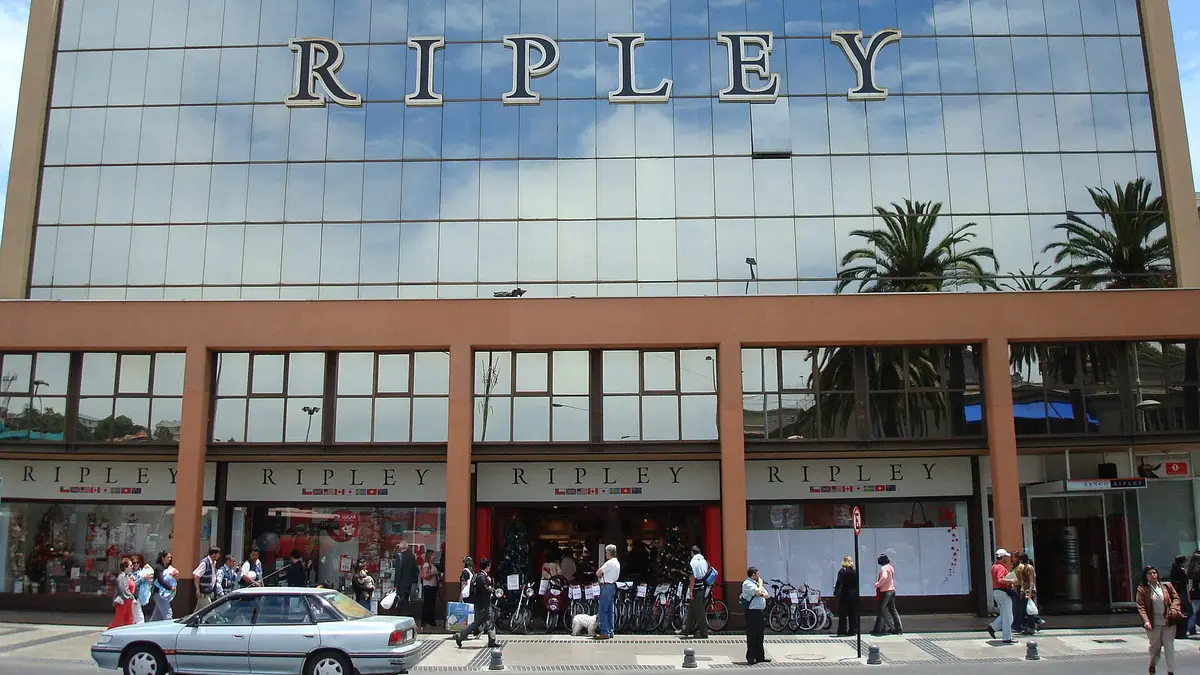
Ripley Corp returned to the local bond market for the first time since February 2021. On Thursday, November 12, 2026 it placed its series R for UF 1 million, about CLP 41.3 billion or US$42 million, through a Dutch auction, at an average rate of UF+3.78%, below the 3.95% at which it had registered the paper, according to Diario Financiero. The same day, Patio Comercial placed its series N for UF 1.6 million (about US$67 million) at UF+4.4%, with orders that more than doubled the offer, according to Diario Financiero. Both issues have the same purpose: refinancing debt.
View the data as a table
| Ripley rate (series R) | UF+3.78% |
| Patio rate (series N) | UF+4.4% |
| Ripley spread | 115 bp |
| Patio spread | 180 bp |
The details of Ripley's bond
- Amount: UF 1 million, about CLP 41.3 billion at today's UF (CLP 41,322.93, Central Bank).
- Rate: UF+3.78% on average, versus 3.95% at registration, with a spread of 115 basis points over the UF sovereign bond curve.
- Term: three years of grace and then amortization until maturity in 2038. Ripley can prepay all principal in 2029, compensating the creditor.
- Rating: A+ from local rating agencies.
- Arrangers: Santander corporate banking and Link Capital.
The contrast with the last issue is large. The series K, placed in February 2021, came out at UF+2.19%, but in August 2023 it traded as high as 9.1% on the secondary market, at the company's worst moment, according to Diario Financiero. That Ripley can place at 3.78% today, with enough demand to cut the rate versus the registered one, shows the market is again lending to it at a cost close to that of other A-rated companies. The unit Banco Ripley has also issued debt, and the Peruvian shopping-mall division tapped the market in August. Banco Ripley issues the Ripley credit card, one of the group's main financial businesses.
Patio's bond and the narrowing spread
Patio, owner of shopping centers, offices and warehouses, paid UF+4.4%, a higher rate than Ripley's, but with a spread of 180 basis points over the reference sovereign bond: less than the 200 bp of its January 2026 issue and the 210 bp of October 2025, according to Diario Financiero. In September 2026, Feller Rate and Humphreys raised its rating from A to A+. Pablo Cortés, a company executive, said the funds will go to refinance liabilities and optimize the financial structure. The deal was negotiated the previous day and placed on the Santiago Stock Exchange.
View the data as a table
| Patio | |
|---|---|
| Oct 2025 | 210 bp |
| Jan 2026 | 200 bp |
| Nov 2026 | 180 bp |
Advertise to investors, treasurers and finance executives. See Pauta Financiera's formats.
See advertising optionsWhat corporate bonds pay in Chile today
This week's issues give a snapshot of the cost of UF debt for Chilean companies. A 115 bp spread over the sovereign in Ripley's case implies the reference government bond yielded about UF+2.6%, a Pauta Financiera calculation from the reported rate and spread. Earlier this week, Arauco placed a hybrid bond for UF 10 million at UF+4.13%, a subordinated, very long-term instrument that therefore pays more than a conventional bond from the same issuer.
| Issuer and series | Date | Amount | Rate | Rating |
|---|---|---|---|---|
| Ripley Corp, R | Nov 12, 2026 | UF 1 million | UF+3.78% | A+ |
| Patio Comercial, N | Nov 12, 2026 | UF 1.6 million | UF+4.4% | A+ (issuer) |
| Arauco, hybrid | Nov 2026 | UF 10 million | UF+4.13% | — |
| Ripley Corp, K | Feb 2021 | — | UF+2.19% | — |
Sources: Diario Financiero, Diario Financiero and Pauta Financiera's note on Arauco. A "UF+3.78%" rate means the bond pays the change in the UF plus 3.78% a year, so the investor is protected from inflation. Investors usually buy these bonds through fixed-income mutual funds or brokers; their price rises when rates fall and drops when rates rise. This information is journalistic and is not investment advice.

What a Dutch auction is and what the A+ rating means
Ripley placed its bond through a Dutch auction, the usual mechanism on the Santiago Stock Exchange for fixed-income issues. Institutional investors (AFPs, insurers, mutual funds) enter orders with the amount they want to buy and the minimum rate they accept. The issuer ranks bids from lowest to highest rate and allocates until the amount is filled; the cut-off rate is the one paid. That is why, when demand exceeds supply, the rate falls: in Ripley's case it ended 17 basis points below the registered rate (3.95% versus 3.78%), and in Patio's case demand more than doubled the amount offered.
The credit rating summarizes the issuer's ability to pay. On the local scale, categories run from AAA (the best) to D, and A, AA and AAA are investment grade with good payment capacity; the "+" sign indicates the upper part of the category. Ripley and Patio are both A+, but the market prices them differently: Ripley pays 115 bp over the sovereign and Patio 180 bp, a gap that reflects each company's terms, structure and business perception. For savers, the closest reference to these rates is UF deposits; we explain it in how much a time deposit yields.
Frequently asked questions about the Ripley and Patio bonds
How much did Ripley place in bonds?
UF 1 million, about US$42 million, in series R, on November 12, 2026, at UF+3.78%.
What will Ripley use the money for?
To refinance existing liabilities, according to Diario Financiero.
What is a bond spread?
It is the difference between the rate on a company's bond and a government bond of similar maturity. It measures the extra risk the market charges that company.
When was Ripley's last issue in Chile?
In February 2021, with series K at UF+2.19%.