Data as of November 20, 2026. An IPO (initial public offering) is the first time a company sells shares to the public on a stock exchange. 2026 is already a record year: according to the ranking by Renaissance Capital, the three largest IPOs in history took place this year on the Nasdaq. The latest was Anthropic, which priced on November 18 at US$83 a share, raised US$81,340 million and closed its first day, the 19th, at US$97.17, 17.07% above the offer price (Europa Press via Diario Estrategia). This guide explains what an IPO is, how it works and who is in the ranking.
View the data as a table
| Offering size (US$ million) | US$81,340 |
| IPO price | US$83 |
| First-day close | US$97.17 |
| Gain over the IPO price | 17.07% |
What an IPO is and how it works
In an IPO, a company goes from private to publicly traded. It can sell new shares, in which case the money goes to the company to fund growth, or let existing shareholders (founders, venture capital funds, employees) sell part of their stakes. Anthropic's had both: according to Fortune, of the 980 million shares sold, 23.6 million came from existing shareholders. The process has similar stages around the world:
- Prospectus and registration: the company files its financial statements and risks with the regulator (the SEC in the United States, the CMF in Chile).
- Price range and roadshow: the underwriting banks sound out investors. Anthropic started with a range of US$70 to US$78 and ended up pricing at US$83 because of demand (Diario Financiero).
- Order book and allocation: the final price is set and shares are allocated, mostly to institutional investors.
- Debut: the stock starts trading and the market sets its price. Anthropic opened at US$111.50, 34% above the IPO price.
- Over-allotment (greenshoe): the banks can sell up to 15% more in the following days if there is demand.
- Lock-up period: existing shareholders cannot sell for a set period, usually months.
At the US$97.17 close, Anthropic's market value reached US$1.27 trillion, or US$1.75 trillion on a fully diluted basis, according to Europa Press via Diario Estrategia. The details of the debut and how to invest from Chile are in our story on Anthropic's stock market debut.
The largest IPOs in history
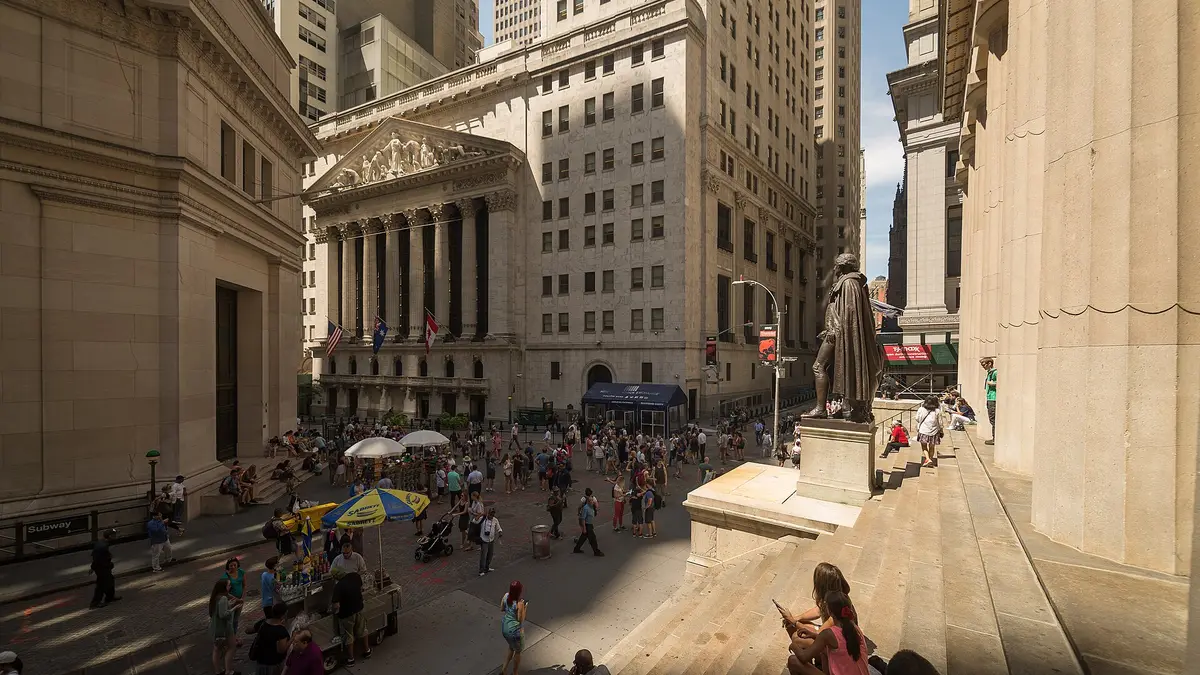
The Renaissance Capital ranking measures each offering's gross amount excluding the over-allotment and in nominal dollars, not adjusted for inflation. On that basis, Anthropic is the largest IPO in history, at US$81,340 million, followed by SpaceX (US$75,000 million, June 2026) and SK hynix (US$26,507 million, July 2026). Behind them are the previous records: Saudi Aramco in 2019 (US$25,599 million) and Alibaba in 2014 (US$21,767 million).
There is a nuance. Including the over-allotment, SpaceX raised about US$85,700 million in total after its banks exercised the full option in June (Reuters via The Star), more than Anthropic's base amount. If Anthropic's banks exercise theirs, its total could rise: Fortune estimates up to US$91.6 billion. So when citing "the largest IPO in history", it is worth saying which measure is used.
| 1 | Anthropic | Nasdaq | 11/18/2026 | 81,340 |
| 2 | SpaceX | Nasdaq | 6/11/2026 | 75,000 |
| 3 | SK hynix | Nasdaq | 7/9/2026 | 26,507 |
| 4 | Saudi Aramco | Tadawul | 12/5/2019 | 25,599 |
| 5 | Alibaba | NYSE | 9/18/2014 | 21,767 |
| 6 | SoftBank Corp | Tokyo | 12/10/2018 | 21,345 |
| 7 | NTT Mobile (Docomo) | Tokyo | 10/22/1998 | 18,089 |
| 8 | Visa | NYSE | 3/18/2008 | 17,864 |
| 9 | AIA | Hong Kong | 10/21/2010 | 17,816 |
| 10 | Enel | NYSE | 11/1/1999 | 16,452 |
| 11 | Nasdaq | 5/17/2012 | 16,007 | |
| 12 | General Motors | NYSE | 11/17/2010 | 15,774 |
| 13 | ICBC (H) | Hong Kong | 10/20/2006 | 13,960 |
| 14 | Deutsche Telekom | NYSE | 11/17/1996 | 13,034 |
| 15 | Rivian | Nasdaq | 11/9/2021 | 11,934 |
| 16 | Alibaba (Hong Kong) | Hong Kong | 11/20/2019 | 11,243 |
| 17 | Dai-ichi Life | Tokyo | 3/23/2010 | 10,986 |
| 18 | LG Energy Solution | Korea Exchange | 1/14/2022 | 10,735 |
| 19 | AT&T Wireless | NYSE | 4/26/2000 | 10,620 |
| 20 | Agricultural Bank (H) | Hong Kong | 7/7/2010 | 10,439 |
| 21 | Rosneft | RTS Moscow | 7/13/2006 | 10,421 |
| 22 | Glencore | London | 5/19/2011 | 10,050 |
| 23 | Aowei Holdings | Hong Kong | 11/26/2013 | 9,300 |
| 24 | Bank of China (H) | Hong Kong | 5/24/2006 | 9,189 |
| 25 | Agricultural Bank (A) | Shanghai | 7/7/2010 | 8,789 |
- October 1998NTT Mobile (Docomo)US$18,089 million on the Tokyo Stock Exchange.
- September 2014AlibabaUS$21,767 million on the New York Stock Exchange.
- December 2019Saudi AramcoUS$25,599 million on Tadawul, Saudi Arabia.
- June 2026SpaceXUS$75,000 million on Nasdaq, almost triple the previous record.
- November 2026AnthropicUS$81,340 million on Nasdaq.
Money raised or valuation: two different rankings
The size of an IPO can be measured in two ways, and they do not give the same order. One is the money raised in the offering, which is what Renaissance Capital ranks. The other is the company's valuation at listing, that is, the share price multiplied by all its shares. According to Fortune, Anthropic listed at a valuation of about US$1.5 trillion, the second largest in history, behind SpaceX, which debuted in June valued at US$1.77 trillion. Fortune also notes that the part of the offering that goes to the company, excluding existing shareholders' shares, is about US$79.4 billion, and that of the 980 million shares, the company initially planned to sell 825 million: demand led it to enlarge the offering.
Companies go public for three main reasons: to raise capital to grow without taking on debt, to give liquidity to founders, employees and funds that invested when it was private, and to gain visibility and a currency (its shares) to buy other companies. The cost is high: underwriting fees, quarterly disclosure requirements, audits and the pressure of a price that changes every day. That is why there are alternatives. In a direct listing, the company lists its shares without selling new ones or hiring banks to guarantee the price, and in a merger with a SPAC (a listed shell company created to buy another business) it skips the traditional offering process.
The largest IPOs in Chile
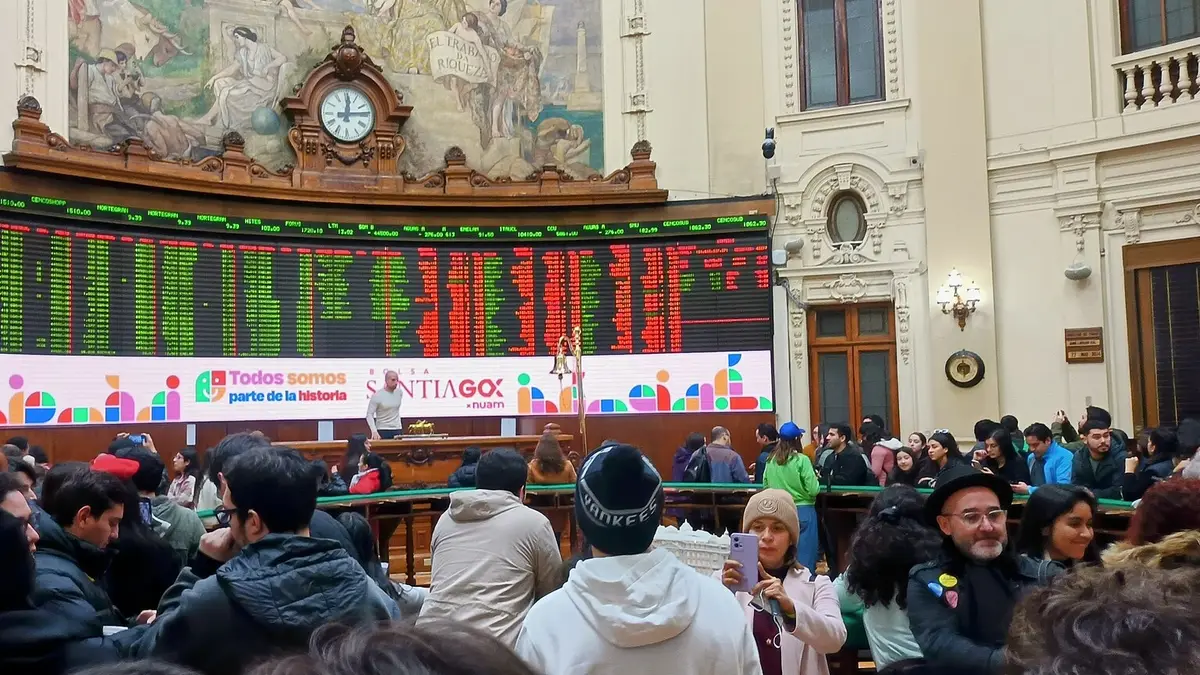
On the Santiago Stock Exchange the amounts are on another scale. The largest local IPO was Cencosud Shopping in 2019, which raised CLP 717.912 billion, about US$1.05 billion (Diario Financiero on Cencosud Shopping). Earlier, Mallplaza debuted in July 2018 with one of the largest offerings in Latin America that year (Diario Financiero on Mallplaza), and ILC, the holding company of the Chilean Chamber of Construction, raised US$470 million in 2012 (Diario Financiero on ILC). Since then IPOs have been scarce, and many Chilean companies prefer to issue bonds, as we explain in how to invest on the Santiago Stock Exchange.
| Company | Year | Amount raised | Source |
|---|---|---|---|
| Cencosud Shopping | 2019 | CLP 717.912 billion (about US$1.05 billion) | Diario Financiero on Cencosud Shopping |
| ILC | 2012 | US$470 million | Diario Financiero on ILC |
| Anthropic (for reference) | 2026 | US$81.34 billion, about 77 times Cencosud Shopping | Renaissance Capital |
How to invest in an IPO from Chile and what the risks are
Shares in a US IPO are allocated almost entirely to funds and institutional investors. A Chilean investor usually buys after the debut, at the market price, through a broker with access to foreign exchanges or an investment app; we compare costs in the best stockbrokers of 2026. Another route is to wait until the stock joins indexes like the Nasdaq-100 or the S&P 500 and buy it indirectly through an ETF. In Chile, local listings are offered through brokers and sometimes include a retail tranche.
- Debut volatility: the price can swing widely in the first hours. Anthropic rose as much as 38.7% and closed 15.6% below its intraday high.
- Short history: a newly listed company has few quarters of audited public results.
- Lock-up expiry: when the lock-up ends, sales by early shareholders can weigh on the price.
- Currency risk: buying in dollars adds exchange-rate swings to the result in pesos.
- Concentration: betting on a single stock is riskier than a diversified fund.
Does your brokerage or investment app want to reach investors who follow big IPOs? See Pauta Financiera's formats.
See advertising optionsFrequently asked questions about IPOs
What does IPO stand for?
Initial public offering: a company's first sale of shares to the public on a stock exchange.
What is the largest IPO in history?
By base amount, Anthropic's (November 2026, US$81,340 million), according to Renaissance Capital. Including the over-allotment, SpaceX's (June 2026) totaled about US$85,700 million.
What is the over-allotment or greenshoe?
An option that lets the underwriting banks sell additional shares, usually up to 15% of the offering, if demand is strong.
Can I buy IPO shares from Chile?
For US IPOs, the usual route is to buy after the debut through a broker with international access. For local ones, brokers open order books.
What was the largest IPO on the Santiago Stock Exchange?
Cencosud Shopping's in 2019, for about US$1.05 billion, according to Diario Financiero.
This information is journalistic and educational, not investment advice. Past returns do not guarantee future ones; check costs, risk and your profile before investing.