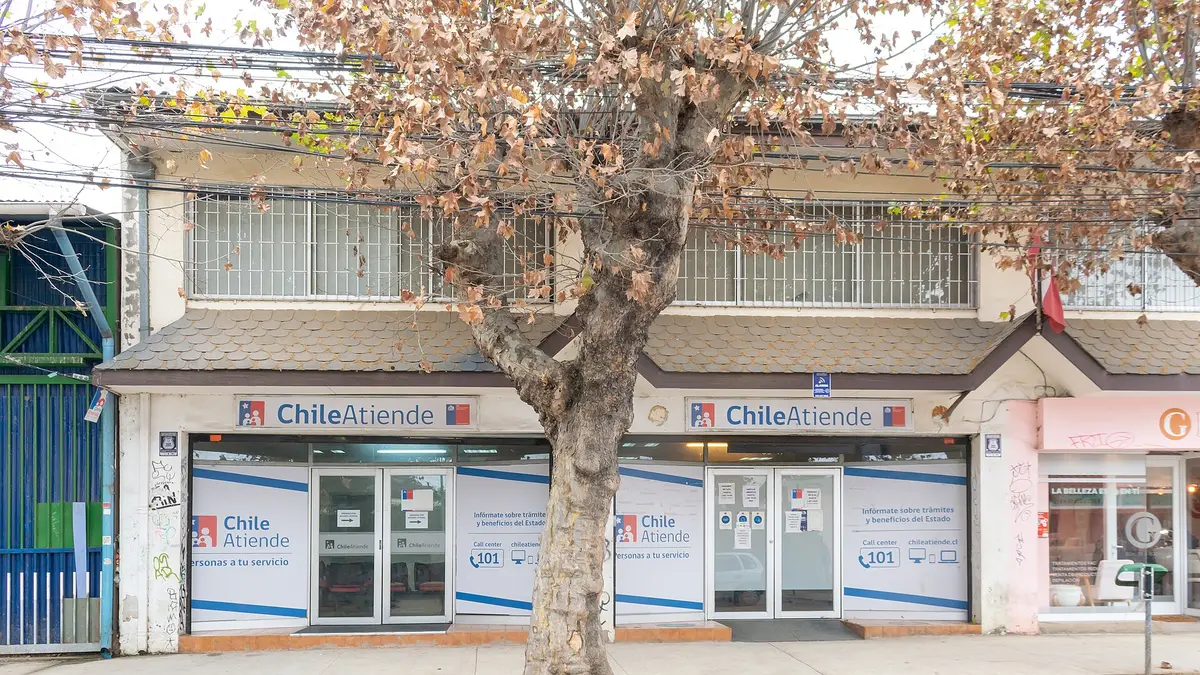
Contribuciones are the property tax paid on houses, apartments, parking spaces, storage units, shops and land in Chile. They are calculated on the assessed value (avalúo fiscal) set by the Internal Revenue Service and paid in four installments a year: April, June, September and November. The last one for 2026 is due on Monday, November 30, according to the Treasury (TGR) and ChileAtiende. For the second half of 2026, a home assessed at up to CLP 61,711,570 pays nothing, and above that amount the rate is 0.893% a year, according to the Internal Revenue Service (SII).
View the data as a table
| Residential exempt amount | $61,711,570 |
| Annual rate up to the threshold | 0.893% |
| Annual rate above the threshold | 1.042% |
| Fourth installment due | 30 |
How contribuciones are calculated, step by step
In June the SII launched a portal explaining the calculation with downloadable examples (SII). The formula has four steps:
- Assessed value: the value the SII assigns to the property based on its land, construction and location. It appears on the assessment certificate on the SII website.
- Taxable value: the assessed value minus the exempt amount, which for homes is CLP 61,711,570 since July 1, 2026 (it was CLP 60,030,710 in the first half).
- Rate: 0.893% a year on the part of the value up to CLP 220,398,431 and 1.042% on anything above that figure, plus a 0.025% surcharge on that excess, according to the Internal Revenue Service (SII) and the SII calculation example for a house.
- Installment: the annual tax is divided into four. Municipal waste collection fees may be added to each installment.
Assessed values and the exempt amount are adjusted every six months by the previous half-year's CPI: for the second half of 2026 the factor was 1.028, according to the Internal Revenue Service (SII). That is why the September and November installments go up even if nothing changes at the property. To see how the prices behind that adjustment are moving, check how much inflation has risen in 2026.
How much property tax you pay by assessed value
The table applies the SII's second-half 2026 rules to several assessed values. It does not include waste fees or personal benefits. The official SII example for an apartment, with an assessed value of CLP 90,237,688 in the first half, gave an installment of CLP 67,437 plus CLP 13,950 in waste fees: CLP 81,387.
| Assessed value | Annual tax | Each installment | Effective rate on value |
|---|---|---|---|
| CLP 50,000,000 | Exempt | — | 0.00% |
| CLP 70,000,000 | CLP 74,016 | CLP 18,504 | 0.11% |
| CLP 90,000,000 | CLP 252,616 | CLP 63,154 | 0.28% |
| CLP 120,000,000 | CLP 520,516 | CLP 130,129 | 0.43% |
| CLP 150,000,000 | CLP 788,416 | CLP 197,104 | 0.53% |
| CLP 180,000,000 | CLP 1,056,316 | CLP 264,079 | 0.59% |
| CLP 220,000,000 | CLP 1,413,516 | CLP 353,379 | 0.64% |
| CLP 250,000,000 | CLP 1,732,922 | CLP 433,231 | 0.69% |
| CLP 300,000,000 | CLP 2,266,422 | CLP 566,606 | 0.76% |
| CLP 400,000,000 | CLP 3,333,422 | CLP 833,356 | 0.83% |
Our own calculation using the exempt amount, rate threshold and surcharge published by the Internal Revenue Service (SII) for the second half of 2026. Because the first slice of value is exempt, the effective rate starts very low and rises with the assessed value, though it never reaches 1%.
| 60 | 0 | 0 | 0.00% |
| 80 | 163,316 | 40,829 | 0.20% |
| 100 | 341,916 | 85,479 | 0.34% |
| 120 | 520,516 | 130,129 | 0.43% |
| 140 | 699,116 | 174,779 | 0.50% |
| 160 | 877,716 | 219,429 | 0.55% |
| 180 | 1,056,316 | 264,079 | 0.59% |
| 200 | 1,234,916 | 308,729 | 0.62% |
| 220 | 1,413,516 | 353,379 | 0.64% |
| 240 | 1,626,222 | 406,556 | 0.68% |
| 260 | 1,839,622 | 459,906 | 0.71% |
| 280 | 2,053,022 | 513,256 | 0.73% |
| 300 | 2,266,422 | 566,606 | 0.76% |
| 320 | 2,479,822 | 619,956 | 0.77% |
| 340 | 2,693,222 | 673,306 | 0.79% |
| 360 | 2,906,622 | 726,656 | 0.81% |
| 380 | 3,120,022 | 780,006 | 0.82% |
| 400 | 3,333,422 | 833,356 | 0.83% |
| 420 | 3,546,822 | 886,706 | 0.84% |
Parking spaces, storage units and vacant lots pay from the first peso
The exempt amount only exists for residential use. A parking space or storage unit with its own roll number pays from the first peso of assessed value, at 1.042% plus the 0.025% surcharge, and urban vacant lots also pay a 100% surcharge, according to the SII's official examples for the first half of 2026. That is why it is worth checking whether your parking space is tied to the home or has a separate roll.
| Official SII example (first half 2026) | Assessed value | Exempt amount | Total per installment |
|---|---|---|---|
| Apartment | CLP 90,237,688 | CLP 60,030,710 | CLP 81,387 (incl. CLP 13,950 waste fee) |
| High-value house | CLP 237,530,004 | CLP 60,030,710 | CLP 432,724 (incl. CLP 26,393 waste fee) |
| Parking space | CLP 17,195,083 | CLP 0 | $45.868 |
| Vacant lot | CLP 1,065,870,996 | CLP 0 | CLP 6,554,289 (incl. 100% surcharge) |
Sources: SII's SII example for an apartment, SII calculation example for a house, parking example and vacant lot example. These are first-half installments; from July they rose 2.8% with the adjustment.
Who is exempt from paying contribuciones
The broadest exemption is the exempt amount: any home assessed at or below CLP 61,711,570 pays nothing, according to the Internal Revenue Service (SII). Most social housing and many small apartments fall below that threshold. The law also exempts certain properties by use, such as government, municipal, educational or religious buildings, according to ChileAtiende.
The current benefit for older people
There is currently a 50% or 100% discount for older people, which the SII applies to the second-half installments and the first-half ones of the following year. The requirements, according to the SII (updated August 26, 2026), are:
| Requirement | 100% discount | 50% discount |
|---|---|---|
| Age reached in 2025 | 60 women, 65 men | 60 women, 65 men |
| Annual income | Up to 13.5 UTA (CLP 11,265,804 at Dec 31, 2025) | Over 13.5 and up to 30 UTA (CLP 25,035,120) |
| Home's assessed value | Up to CLP 234,328,604 | Up to CLP 234,328,604 |
| Sum of all properties' values | Up to CLP 313,048,370 | Up to CLP 313,048,370 |
The value limits are as of July 1, 2026. The property must be registered in the person's name (alone or with a spouse, civil partner or heir children) and used as a home (SII).
The new property tax exemption for people over 65 from 2027
The Law for National Reconstruction and Economic and Social Development, published in the Official Gazette in October, creates a full exemption from property tax for the main home of people aged 65 or over, according to the SII statement of October 19. It is not automatic: you must apply with a sworn statement on the SII website (Tax Password or ClaveÚnica) or at a regional office. If filed by December 31, 2026, it applies from January 1, 2027; if filed later, only from 2028, according to the SII guide cited by Emol. El Mercurio estimated that 200,803 owners who pay today could qualify.
- Be 65 or older and an individual who owns the property.
- It must be the usual, main residence; associated storage units and parking spaces can be included.
- Be up to date on the previous year's property tax and municipal waste fees.
- In co-ownership, hold at least 50% of the rights (25% if inherited from a spouse or civil partner).
- Anyone who obtains it without meeting the requirements pays a 300% fine on the tax avoided and cannot apply again for ten years, according to Diario Constitucional.
The same law brings other changes for family wealth, such as a one-time 50% cut in gift tax from December, which we review in how inheritance tax works in Chile.
Does your brand speak to homeowners and property investors? See Pauta Financiera's formats.
See advertising optionsPayment calendar and what is happening with the reassessment
- Apr 30, 2026First installment
- Jun 30, 2026Second installment
- Sep 30, 2026Third installmentAlready with the 2.8% second-half adjustment.
- Nov 30, 2026Fourth installment
- Dec 31, 2026Deadline to apply for the 65+ exemption
- 2027Exemption takes effect and urban reassessment arrivesThe reassessment planned for 2026 was postponed to 2027.
The SII updates the assessed values of urban property every four years through the reassessment (reavalúo). The last one was in 2022 and another was due in 2026, but the public-sector pay law approved in January postponed it to 2027 for urban property and to 2029 for farmland, according to lawyers quoted by Emol. A reassessment usually raises values and, with them, installments, so plan for it if your home is close to the exempt amount. Those with a mortgage who want to lower their monthly housing costs can also check when it pays to refinance a mortgage.
How to pay and what happens if you are late
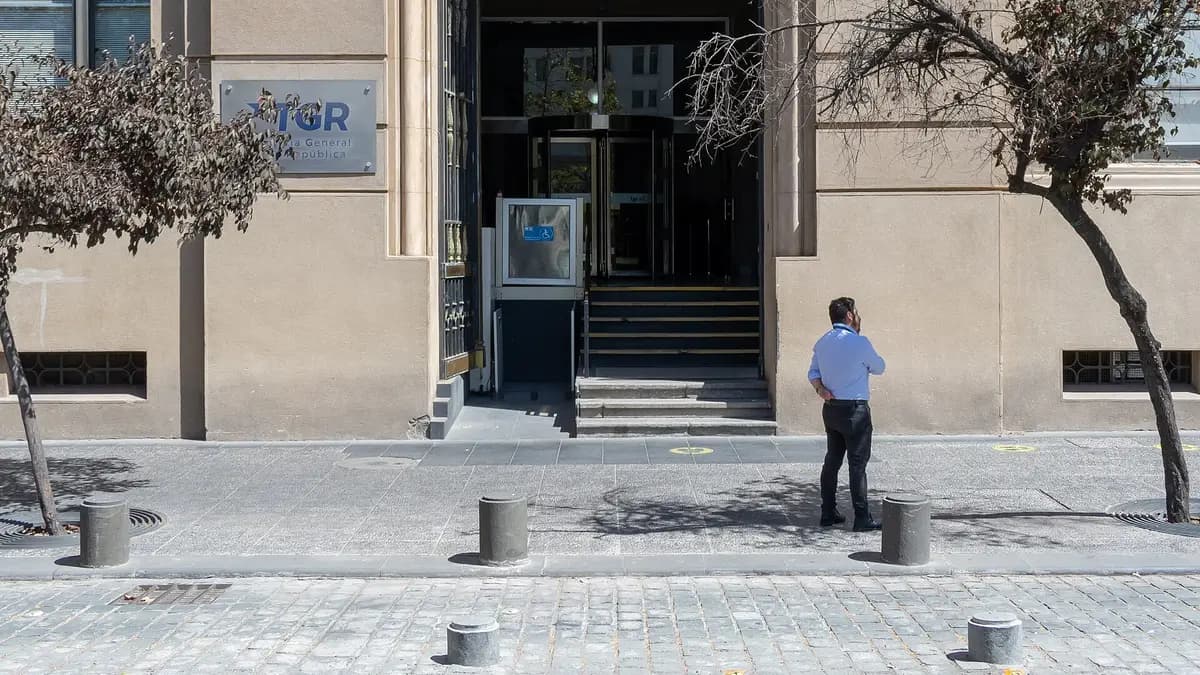
Payment is made online on the SII or Treasury website using the property's roll number (rol), region and municipality, or at authorized banks with the payment slip, according to ChileAtiende. Paying after the due date triggers adjustments and penalty interest. There are exceptions for disasters: for properties in Ñuble and in Concepción, Penco and Tomé affected by January's wildfires, the SII postponed the four 2026 installments to the 2027 deadlines and waived interest (SII). If your debts pile up, how to get off Dicom explains which debts are reported and how to sort them out.
Frequently asked questions about contribuciones
When is the fourth 2026 installment due?
On November 30, 2026, a Monday (Treasury (TGR)).
From what assessed value do you pay?
For homes, from an assessed value above CLP 61,711,570 in the second half of 2026 (Internal Revenue Service (SII)).
How much does a home assessed at CLP 120 million pay?
About CLP 520,516 a year, or CLP 130,129 per installment, excluding waste fees or benefits (our calculation with Internal Revenue Service (SII) values).
Do people over 65 no longer pay?
They pay the 2026 installments. The main-home exemption applies from 2027 for those who apply by December 31, 2026 (Emol).
Why did my installment rise in September?
Because the assessed value is adjusted every six months by CPI: the second-half 2026 factor was 1.028 (Internal Revenue Service (SII)). This guide is informational; your property's exact amount is on its assessment certificate.