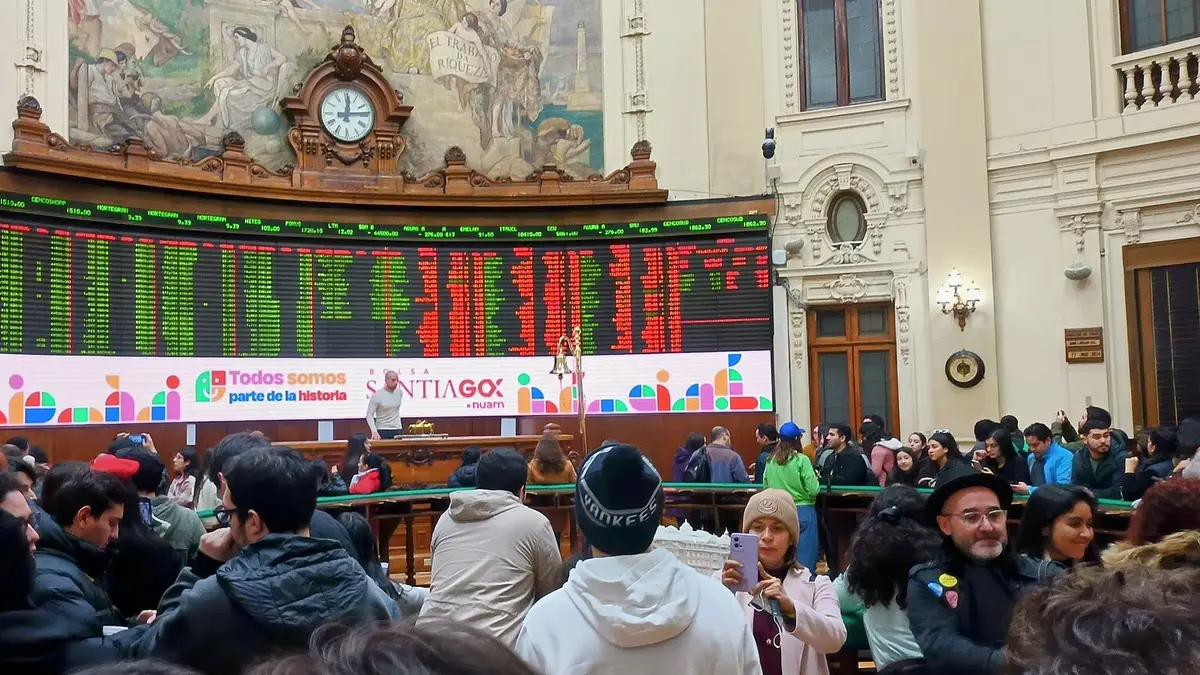
Data as of November 20, 2026. Inmobiliaria Mall Viña del Mar S.A., known as Grupo Marina, placed two bond series on Wednesday, November 18, on the Santiago Stock Exchange, through a Dutch auction, for a total of UF 2 million, according to its material event filing published by Diario Estrategia. Series I, for UF 1 million, matures on September 15, 2032 and was placed at a rate of 3.34% a year over the UF; series K, also for UF 1 million, matures on September 15, 2047 and priced at 3.54%. The funds will be used to refinance short- and long-term liabilities and for general corporate purposes.
View the data as a table
| Total amount (UF million) | UF 2 |
| Series I rate (2032) | UF+3.34% |
| Series K rate (2047) | UF+3.54% |
| Equivalent in pesos (billions) | $82.7 |
Grupo Marina places bonds more cheaply than in 2024
At today's UF (CLP 41,371.05), UF 2 million is equivalent to about CLP 82.7 billion, close to US$81 million at this morning's dollar (Pauta Financiera calculation). The most useful comparison is with the company itself: in April 2024, Grupo Marina placed another UF 2 million with series C at 4.08% (a spread of 137 basis points) and series E at 4.39% (157 points), with demand of more than UF 3.3 million, according to Diario Financiero. This time it borrows for longer terms and pays 74 and 85 basis points less in each comparable tranche.
Grupo Marina operates shopping centers in Viña del Mar, Curicó and Concepción (Diario Financiero). Both series were issued under bond lines No. 1260 and No. 1262, registered with the CMF. The company said that at this stage it cannot quantify the effect of the transaction on its results (Diario Estrategia).

Corporate bond rates: November brings issues below 4%
Grupo Marina joins a string of local UF issues we have tracked this month. Mallplaza placed UF 5 million at 25 years at 3.47%, with the lowest spread in its history, as we reported in Mallplaza's record bond; Ripley Corp returned to the market with its series R at 3.78% and Patio with series N at 4.4%, and Arauco paid 4.13% for a hybrid bond due 2058. The table summarizes the placement rates reported by each issuer.
| Issuer | Series | Amount | Maturity | Placement rate |
|---|---|---|---|---|
| Grupo Marina | Series I | UF 1 million | 2032 | UF+3.34% |
| Grupo Marina | Series K | UF 1 million | 2047 | UF+3.54% |
| Mallplaza | Single series | UF 5 million | 25 years | UF+3.47% |
| Ripley Corp | Series R | UF 1 million | — | UF+3.78% |
| Arauco | Series AH (hybrid) | UF 10 million | 2058 | UF+4.13% |
| Patio | Series N | UF 1.6 million | — | UF+4.40% |
Sources: material event filings and press releases from each issuer collected in Pauta Financiera's November 2026 articles; Grupo Marina: Diario Estrategia. Ripley and Patio did not report the maturity in their placement announcements; details of both issues are in the new Ripley and Patio bonds.
View the data as a table
| Term (years) | Rate (%) | |
|---|---|---|
| Grupo Marina Series I | 6 | 3% |
| Grupo Marina Series K | 21 | 4% |
| Mallplaza Single series | 25 | 3% |
| Arauco Series AH (hybrid) | 32 | 4% |
Is your company issuing debt or seeking investors? Advertise on Pauta Financiera.
See advertising optionsThe benchmark: Central Bank UF bonds
Companies pay a premium over the risk-free bonds of the Central Bank and the Treasury (BCU and BTU). In October 2026, the 5-year BCU yielded 2.37%, the 10-year 2.70% and the 30-year 2.77% in the secondary market, according to the Central Bank. That is why Grupo Marina's series I, at about six years, pays roughly one percentage point more than the 5-year BCU, a gap that compensates for the company's credit risk (Pauta Financiera calculation; it is not the official spread reported by the issuer). Long-term Central Bank yields rose in the second half, which makes it more notable that companies are placing debt below 4%.
View the data as a table
| 5 years | 10 years | 30 years | |
|---|---|---|---|
| Jan 25 | 2.60% | 2.61% | 2.44% |
| Feb 25 | 2.45% | 2.54% | 2.49% |
| Mar 25 | 2.52% | 2.58% | 2.43% |
| Apr 25 | 2.33% | 2.43% | 2.36% |
| May 25 | 2.50% | 2.57% | 2.48% |
| Jun 25 | 2.48% | 2.61% | 2.61% |
| Jul 25 | 2.46% | 2.59% | 2.68% |
| Aug 25 | 2.18% | 2.44% | 2.61% |
| Sep 25 | 2.27% | 2.41% | 2.55% |
| Oct 25 | 2.24% | 2.35% | 2.46% |
| Nov 25 | 2.26% | 2.34% | No data |
| Dec 25 | 2.24% | 2.33% | 2.32% |
| Jan 26 | 2.20% | 2.32% | 2.35% |
| Feb 26 | 2.09% | 2.32% | 2.38% |
| Mar 26 | 2.00% | 2.18% | 2.29% |
| Apr 26 | 1.77% | 2.13% | 2.33% |
| May 26 | 2.02% | 2.29% | 2.53% |
| Jun 26 | 2.29% | 2.47% | 2.67% |
| Jul 26 | 2.26% | 2.48% | 2.79% |
| Aug 26 | 2.27% | 2.53% | 2.77% |
| Sep 26 | 2.25% | 2.61% | 2.86% |
| Oct 26 | 2.37% | 2.70% | 2.77% |
What the spread is and why it is falling
The spread is the difference between the rate a company pays and that of a Central Bank bond with a similar term: it measures how much more investors demand to lend to that company. In April 2024, Grupo Marina paid spreads of 137 and 157 basis points (Diario Financiero); this month, Mallplaza placed at 62 basis points, the lowest in its history, and Arauco at 163 basis points on its hybrid bond, a subordinated and riskier instrument, as we explain in what a hybrid bond is. Grupo Marina did not report the spread of this placement in its filing.
Spreads falling while Central Bank yields rise indicates there is appetite for local corporate UF debt: institutional investors accept a smaller risk premium to lock in real returns of more than 3% over the long term. For companies, that makes refinancing cheaper; for buyers, it means they now receive less compensation for credit risk than two years ago.

What these rates mean for investors
- Return above inflation. A bond at UF+3.34% pays that interest on top of the change in the UF; if inflation is 3.4% in a year, the nominal return is around 6.8% before costs (illustrative calculation). The UF and how it is calculated are in the UF value today.
- Price risk. If market rates rise, the price of an existing bond falls; the longer the term (like series K, due 2047), the more it moves.
- Access. These issues are bought mainly by pension funds, insurers and funds; individuals can access them through brokers or fixed-income funds, as we explain in how to invest in bonds in Chile.
On the same day, LATAM Airlines reported another debt transaction: it extended its revolving credit line contracted in the United States until November 18, 2031 and raised the committed amount from US$800 million to US$1.06 billion, with an option to add up to US$240 million more (Diario Estrategia).
Frequently asked questions about Grupo Marina's bonds
How much did Grupo Marina raise?
UF 2 million in two series of UF 1 million each (Diario Estrategia), about CLP 82.7 billion at the UF of November 20, 2026.
What is a Dutch auction?
It is a mechanism in which investors bid amounts and rates, and all winning bidders receive the same cut-off rate that allows the full amount to be placed.
What will it use the money for?
To refinance short- and long-term liabilities and other general corporate purposes (Diario Estrategia).
Can I buy these bonds?
Once placed, they trade on the Santiago Stock Exchange and can be bought through a broker. Pauta Financiera does not recommend specific instruments: check the credit rating, term and costs before investing.