Data as of November 9, 2026. In half of all cases, a university degree in Chile costs more than CLP 5,270,000 a year in tuition alone. That is the median annual tuition of 1,964 professional degree programs at 48 universities listed in the SIES, Ministry of Education, Oferta Académica 2026, published by the Higher Education Information Service in June 2026. On top of that comes an annual enrollment fee (matrícula), with a median of CLP 226,580.
Universities usually set their 2027 tuition between December and January, so the latest official reference today is 2026. Using it, a full Medicine degree adds up to a median of CLP 71.7 million and a Social Work degree to CLP 20.5 million. But almost half of students do not pay that price: 634,229 people studied tuition-free in 2026, 45.98% of undergraduate enrollment, according to the Ministry of Education.
View the data as a table
| Median annual university tuition | $5,270,000 |
| Median annual Medicine tuition | $10,334,000 |
| Students with free tuition in 2026 | 634,229 |
| CAE debtors required to repay | 1,029,000 |
How much it costs to study at a university in Chile in 2027
The price of a degree has three parts: the annual tuition (arancel, what the university charges for teaching), the enrollment fee (matrícula, a fixed charge every year) and the formal length of the program. The SIES database lists all three for every program. It does not include graduation fees, materials, transport or housing, which can weigh as much as tuition if the student moves to another city.
The type of institution changes the bill a lot. State universities in the Council of Rectors (CRUCH) have the lowest median among universities, CLP 4,790,000, and private CRUCH universities the highest, CLP 5,937,000. Private universities outside the Council sit in between on tuition (CLP 5,430,000) but charge the highest enrollment fee (a median of CLP 320,000). A professional institute costs about half.
| Type of institution | Programs | Median annual tuition 2026 | Median enrollment fee |
|---|---|---|---|
| State universities (CRUCH) | 669 | CLP 4,790,000 | CLP 212,000 |
| Private CRUCH universities | 518 | CLP 5,937,000 | CLP 207,187 |
| Other private universities | 777 | CLP 5,430,000 | CLP 320,000 |
| Professional institutes | 2,365 | CLP 2,740,000 | CLP 240,000 |
| Technical training centers | 651 | CLP 2,425,653 | CLP 94,000 |
Source: SIES, Ministry of Education, Oferta Académica 2026. Our own calculation from the official database: undergraduate professional degrees, in person and daytime, regular plan, with new students in 2026. For institutes and technical centers, all in-person daytime undergraduate programs with new students are counted, both technical and professional.
How much tuition rose in three years
The median university tuition went from CLP 4,273,000 in 2023 to CLP 5,270,000 in 2026, a rise of 23.3%. Between 2025 and 2026 alone it rose 7.6%. In Medicine the median went from CLP 8,796,464 to CLP 10,334,000, and in Primary School Teaching from CLP 3,254,000 to CLP 4,254,000. As an exercise, if the median repeated this year's increase in 2027 it would reach about CLP 5,668,000; this is an illustrative calculation, not an official forecast.
View the data as a table
| Medicine | Law | All degrees | Psychology | Primary School Teaching | |
|---|---|---|---|---|---|
| 2023 | $8,796,464 | $4,590,000 | $4,273,000 | $4,379,500 | $3,254,000 |
| 2024 | $9,310,963 | $4,876,500 | $4,570,000 | $4,610,000 | $3,447,000 |
| 2025 | $9,886,500 | $5,443,000 | $4,900,000 | $5,121,000 | $4,013,000 |
| 2026 | $10,334,000 | $5,650,000 | $5,270,000 | $5,473,750 | $4,254,000 |
How much a university degree in Chile costs by field
To estimate the cost of the whole degree, for each program we multiplied tuition and enrollment fee by the formal number of years, then took the median by field. The result is in 2026 pesos: it does not include later increases or extra semesters, which are common in practice. Medicine and Dentistry are the only fields above CLP 10 million a year at the median; teaching degrees and Social Work are below CLP 4.3 million.
| Degree | Programs | Annual tuition (median) | Formal length | Cost of the whole degree (median) |
|---|---|---|---|---|
| Medicine | 38 | CLP 10,334,000 | 7 years | CLP 71,724,811 |
| Dentistry | 24 | CLP 10,146,586 | 6 years | CLP 62,217,000 |
| Veterinary Medicine | 39 | CLP 6,495,000 | 5 years | CLP 33,700,000 |
| Architecture | 40 | CLP 6,050,000 | 5.5 years | CLP 34,569,458 |
| Industrial Civil Engineering | 56 | CLP 5,911,500 | 5 years | CLP 32,498,500 |
| Pharmacy | 35 | CLP 5,881,000 | 5 years | CLP 31,285,000 |
| Computer Science Engineering | 50 | CLP 5,662,000 | 5 years | CLP 30,690,750 |
| Law | 75 | CLP 5,650,000 | 5 years | CLP 30,662,500 |
| Nursing | 80 | CLP 5,795,100 | 5 years | CLP 29,915,500 |
| Physical Therapy (Kinesiology) | 73 | CLP 5,608,000 | 5 years | CLP 29,020,000 |
| Business Administration (Ingeniería Comercial) | 70 | CLP 5,553,000 | 5 years | CLP 28,275,000 |
| Psychology | 84 | CLP 5,473,750 | 5 years | CLP 28,355,250 |
| Journalism | 22 | CLP 5,257,000 | 5 years | CLP 27,016,250 |
| Nutrition and Dietetics | 52 | CLP 5,130,500 | 5 years | CLP 26,430,000 |
| Accounting and Auditing | 34 | CLP 4,741,000 | 5 years | CLP 23,611,500 |
| Primary School Teaching | 39 | CLP 4,254,000 | 5 years | CLP 22,290,000 |
| Social Work | 40 | CLP 3,907,000 | 5 years | CLP 20,462,500 |
Source: SIES, Ministry of Education, Oferta Académica 2026. Our own calculation from the official database: undergraduate professional degrees, in person and daytime, regular plan, with new students in 2026. Cost of the whole degree = (tuition + enrollment fee) × formal years, median by generic field; no annual increases or graduation fees.
In the most popular fields the gap between universities is large. Law ranges from CLP 3,935,000 to CLP 8,380,000 a year; Psychology, from CLP 3,255,251 to CLP 8,380,000, and Business Administration, from CLP 4,190,000 to CLP 9,540,000. That is why it pays to check each program's exact tuition on the Mi Futuro site before applying, rather than relying on an average.
How much it costs to study Medicine in Chile, university by university
Medicine is the most expensive and the longest degree: 7 years in most programs. The highest annual tuition in the database is at Universidad Diego Portales, at CLP 11,784,000, and the lowest at Universidad de Magallanes, at CLP 6,923,000. Adding enrollment fees and years, the full degree ranges from about CLP 49.6 million to CLP 90.7 million. State universities outside Santiago have the lowest tuition.
| Universidad Diego Portales | Casa Central (Santiago) | $11,784,000 | $1,178,000 | 7 | $90,734,000 |
| Universidad Andrés Bello | Casa Central (Santiago) | $11,730,000 | $911,000 | 6 | $75,846,000 |
| Universidad San Sebastián | Sede Santiago | $11,730,000 | $709,700 | 7 | $87,077,900 |
| Universidad Finis Terrae | Casa Central (Santiago) | $11,620,000 | $1,042,000 | 7 | $88,634,000 |
| Universidad Mayor | Sede Temuco | $11,465,086 | $1,212,300 | 7 | $88,741,702 |
| Universidad Mayor | Sede Huechuraba | $11,465,086 | $1,217,200 | 7 | $88,776,002 |
| Universidad San Sebastián | Sede Concepción | $11,250,000 | $709,700 | 7 | $83,717,900 |
| Universidad Autónoma de Chile | Campus Providencia | $11,170,000 | $670,000 | 7 | $82,880,000 |
| Universidad Católica de la Santísima Concepción | Casa Central (Concepción) | $11,030,000 | $129,000 | 7 | $78,113,000 |
| Universidad Bernardo O'Higgins | Casa Central (Santiago) | $11,000,000 | $700,000 | 7 | $81,900,000 |
| Universidad Central de Chile | Santiago | $10,770,000 | $670,000 | 7 | $80,080,000 |
| Pontificia Universidad Católica de Chile | Casa Central | $10,720,000 | $195,000 | 6 | $65,490,000 |
| Universidad Autónoma de Chile | Casa Central (Temuco) | $10,621,000 | $670,000 | 7 | $79,037,000 |
| Universidad Autónoma de Chile | Sede Talca | $10,621,000 | $670,000 | 7 | $79,037,000 |
| Universidad San Sebastián | Sede Valdivia | $10,612,600 | $709,700 | 7 | $79,256,100 |
| Universidad San Sebastián | Sede Patagonia (Puerto Montt) | $10,612,600 | $709,700 | 7 | $79,256,100 |
| Universidad Católica del Maule | Casa Central | $10,453,000 | $190,000 | 7 | $74,501,000 |
| Universidad Andrés Bello | Sede Concepción | $10,418,000 | $919,000 | 6 | $68,022,000 |
| Universidad Andrés Bello | Sede Viña del Mar | $10,344,000 | $911,000 | 6 | $67,530,000 |
| Universidad de Talca | Casa Central (Talca) | $10,324,000 | $272,000 | 7 | $74,172,000 |
| Universidad de Concepción | Casa Central | $10,236,008 | $52,795 | 7 | $72,021,621 |
| Universidad Católica de Temuco | Casa Central (Temuco) | $10,066,000 | $238,000 | 7 | $72,128,000 |
| Universidad del Alba | Casa Central (Santiago - Providencia) | $9,900,000 | $304,000 | 7 | $71,428,000 |
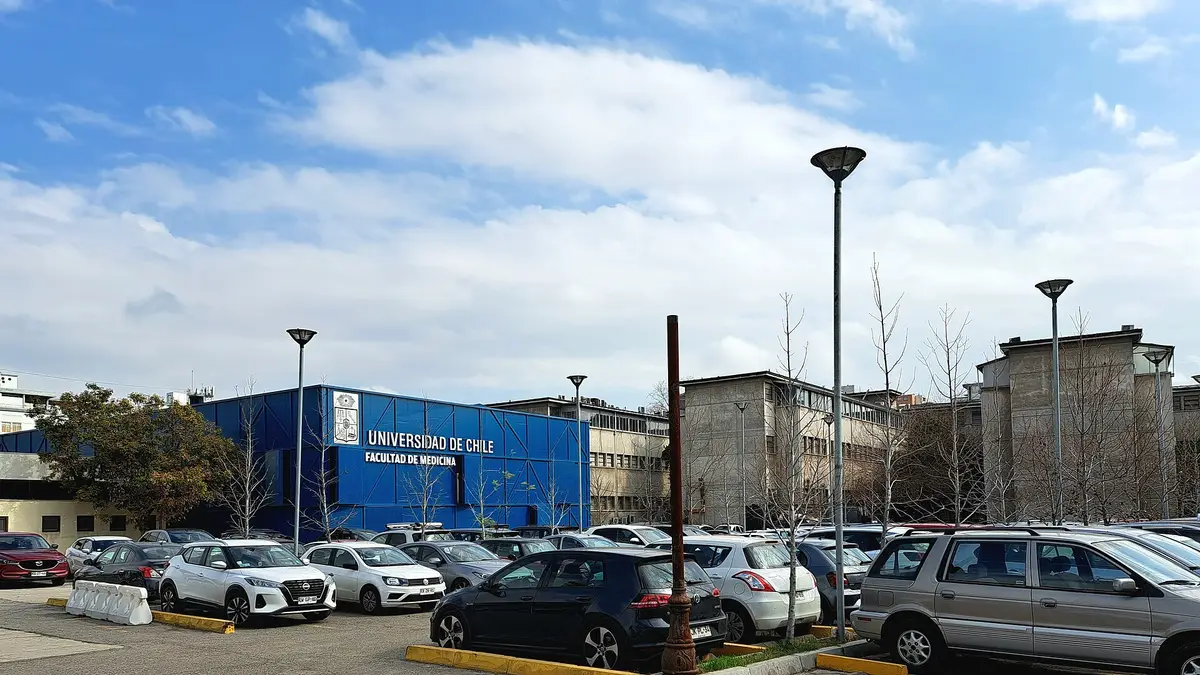
| Universidad de Chile | Santiago | $9,468,300 | $217,600 | 7 | $67,801,300 |
| Universidad del Alba | Sede La Serena | $9,390,000 | $288,000 | 7 | $67,746,000 |
| Universidad Austral de Chile | Casa Central | $8,600,000 | $270,000 | 7 | $62,090,000 |
| Universidad del Bío-Bío | Sede Chillán | $8,535,000 | $138,000 | 7 | $60,711,000 |
| Universidad de Atacama | Casa Central (Copiapó) | $8,464,000 | $204,000 | 7 | $60,676,000 |
| Universidad Católica del Norte | Sede Coquimbo | $8,331,000 | $195,000 | 7 | $59,682,000 |
| Universidad de Santiago de Chile | Casa Central (Santiago) | $8,262,000 | $212,000 | 7 | $59,318,000 |
| Universidad de Antofagasta | Sede Campus Coloso | $7,913,000 | $225,000 | 7 | $56,966,000 |
| Universidad de Tarapacá | Casa Central (Arica) | $7,880,000 | $0 | 7 | $55,160,000 |
| Universidad de Los Lagos | Casa Central (Osorno) | $7,743,000 | $188,000 | 7 | $55,517,000 |
| Universidad de La Serena | La Serena | $7,374,000 | $226,580 | 6 | $45,603,480 |
| Universidad de La Frontera | Casa Central (Temuco) | $7,036,000 | $240,000 | 7 | $50,932,000 |
| Universidad de O'Higgins | Sede Rancagua | $6,970,000 | $294,000 | 7 | $50,848,000 |
| Universidad de Magallanes | Casa Central (Punta Arenas) | $6,923,000 | $166,000 | 7 | $49,623,000 |
Where it costs more: tuition by region
By campus region, the highest median is in Arica y Parinacota (CLP 5,905,000) and the Santiago Metropolitan Region (CLP 5,900,000), where a third of the programs in the database are taught. The lowest is in Aysén (CLP 4,108,000). The regional median depends on which degrees are offered in each place, so it is a general reference, not the price of a specific degree.
View the data as a table
| Median tuition | |
|---|---|
| Arica y Parinacota | $5,905,000 · 37 programs |
| Metropolitana | $5,900,000 · 673 programs |
| Los Ríos | $5,879,000 · 70 programs |
| Biobío | $5,790,500 · 218 programs |
| Maule | $5,397,000 · 117 programs |
| Valparaíso | $5,194,000 · 246 programs |
| Antofagasta | $5,165,500 · 78 programs |
| La Araucanía | $5,152,000 · 141 programs |
| Los Lagos | $5,078,000 · 97 programs |
| Magallanes | $4,752,000 · 26 programs |
| O'Higgins | $4,609,000 · 25 programs |
| Coquimbo | $4,598,000 · 94 programs |
| Tarapacá | $4,525,500 · 48 programs |
| Ñuble | $4,482,000 · 58 programs |
| Atacama | $4,264,000 · 23 programs |
| Aysén | $4,108,000 · 13 programs |
Does your bank, credit union or school want to reach families financing a university degree? Advertise on Pauta Financiera.
See advertising optionsFree tuition in 2027: who pays neither tuition nor enrollment fee
Free tuition (gratuidad) covers the regulated tuition and the basic enrollment fee for the nominal length of the degree. It goes to students from the 60% of lowest-income households (deciles 1 to 6) who complete the FUAS application and enroll in an in-person undergraduate program at a participating institution, according to fuas.cl. For the 2026 academic year there are 68 institutions: 38 universities, 7 professional institutes and 23 technical centers, set in Exempt Resolution No. 11,802 of 2025.
In March 2026 the government said it would seek to exclude from free tuition those who start a professional degree after age 30, but in April the Segpres minister confirmed that restriction would not be part of the reconstruction bill, Pauta reported. For the 2027 admission cycle the requirements remain those of Law 21,091. The first FUAS application window closed on November 5; socioeconomic results arrive in December and benefits are assigned at enrollment.
Scholarships to pay for university: how much each one covers
Students without free tuition, or at a non-participating institution, can apply for the Ministry of Education's tuition scholarships, which are not repaid. The key difference is how much they pay: some cover the reference tuition set by the ministry and others a fixed CLP 1,150,000 a year. If the actual tuition is higher, the student pays the difference or covers it with a loan.
| Benefit | What it covers per year | Main requirement | Awarded in 2026 |
|---|---|---|---|
| Free tuition | Regulated tuition and enrollment fee | Lowest-income 60% and participating institution | 634,229 |
| Bicentenario Scholarship | Reference tuition | Lowest-income 70% and 510 PAES points | 45,921 |
| Juan Gómez Millas Scholarship | Up to CLP 1,150,000 | Lowest-income 70% and 510 PAES points | 16,089 |
| Academic Excellence Scholarship | Up to CLP 1,150,000 | Top 10% of grades in a subsidized school and lowest-income 80% | n/a |
| Teaching Vocation Scholarship | Full actual tuition and enrollment fee | High PAES score in eligible teaching degrees | n/a |
| Meal allowance (BAES) | CLP 48,000 a month | Quintiles 1-3 with free tuition, a scholarship or CAE | n/a |
Sources: fuas.cl, 2027 benefits; Ministry of Education, 2026 benefit results (awards); ChileAtiende (BAES 2026, CLP 50,000 in Magallanes) and the Student Benefits portal (Teaching Vocation Scholarship). "n/a": no award figure in the official report cited.
CAE and the Solidarity Fund: what it costs to borrow for a degree
If free tuition or a scholarship does not apply, the state offers two loans. The State-Guaranteed Loan (CAE) is granted by a bank in UF (the inflation-indexed unit) at UF + 2% a year, covers up to the reference tuition and can be used at accredited universities, institutes and technical centers, according to Comisión Ingresa. Repayment starts 18 months after graduating and is spread over 10, 15 or 20 years; if the installment exceeds 10% of income, borrowers can ask the Treasury to pay the difference through the income-contingency benefit. Because the debt is in UF it rises with inflation, so it helps to understand how the UF is calculated before signing.
The University Solidarity Credit Fund (FSCU) only applies at Council of Rectors universities, lends in UTM (a monthly tax unit) at 2% a year and is repaid with 5% of the previous year's income, starting two years after graduating, according to the CMF. Because it is in UTM, the balance is adjusted with the monthly UTM value. In 2026, 26,408 Solidarity Fund loans were awarded; the CAE added 59,600 new borrowers in 2025.
| State-Guaranteed Loan (CAE) | Solidarity Fund (FSCU) | |
|---|---|---|
| Lender | A bank, guaranteed by the state | The state, through the university |
| Interest | UF + 2% a year | 2% a year in UTM |
| Where it applies | Accredited universities, institutes and technical centers | CRUCH universities only |
| How much you pay | Fixed installment; 10% of income cap on request | 5% of the previous year's income |
| Repayment starts | 18 months after graduating | 2 years after graduating |
| Term | 10, 15 or 20 years | 12 years (15 if the debt exceeds 200 UTM) |
Sources: Comisión Ingresa and the 2026 CAE contract; CMF and the Student Benefits portal (FSCU). Accessed November 9, 2026.
How much does a graduate end up paying? Among those already repaying the CAE, 75% have an installment of up to 2 UF; in that group the average installment is 0.92 UF (about CLP 37,992 at the November 9 UF value) and the average outstanding balance is 160 UF (about CLP 6.6 million), according to Comisión Ingresa's 2025 Public Report. The same report counts 1,029,000 debtors required to repay as of December 2025, of whom only 38% were current, a figure that weighs on the map of delinquent debt in Chile.
View the data as a table
| New borrowers (thousands) | |
|---|---|
| 2006 | 21.3 |
| 2007 | 35.0 |
| 2008 | 42.7 |
| 2009 | 69.9 |
| 2010 | 91.2 |
| 2011 | 93.9 |
| 2012 | 89.4 |
| 2013 | 92.1 |
| 2014 | 88.2 |
| 2015 | 94.8 |
| 2016 | 89.8 |
| 2017 | 65.9 |
| 2018 | 63.4 |
| 2019 | 63.7 |
| 2020 | 62.3 |
| 2021 | 47.2 |
| 2022 | 47.4 |
| 2023 | 61.1 |
| 2024 | 58.1 |
| 2025 | 59.6 |
What is happening with the FES bill and the end of the CAE
The bill creating Higher Education Financing (FES) to replace the CAE and the Solidarity Fund was passed by the Chamber of Deputies in August 2025 and began its passage in the Senate Education Committee in October of that year, the Ministry of Education reported. In March 2026, Finance Minister Jorge Quiroz confirmed that President José Antonio Kast's government will not support the bill, according to La Tercera. As of November 9, 2026, the FES is not law, and for the 2027 admission cycle the FUAS still offers the CAE and the Solidarity Fund, as fuas.cl shows.
What did change is collection. Under the Reconstruction Law No. 21,850, the Treasury opened an agreement to reschedule the entire CAE debt in up to 48 equal monthly installments, with no prior requirements and a 90-calendar-day window from the law's publication, the General Treasury said on October 19. It is an alternative to the existing agreement of up to 24 months capped at 10% of income: the first guarantees paying off the debt if every installment is paid; the second offers a lower installment but may leave a balance outstanding.
- 2006First CAE loans awardedCreated by Law 20,027.
- 2012The rate drops to UF + 2% a yearLaw 20,634, which also creates the 10%-of-income cap.
- 2016Free tuition begins138,951 students in its first year.
- August 2025The Chamber passes the FES bill
- October 2025The FES bill reaches the Senate Education Committee
- March 2026The government says it will not back the FES
- April 2026The age-30 limit on free tuition is dropped
- October 19, 202648-installment plan for CAE debtorsReconstruction Law No. 21,850.
How to estimate what university will cost you
- Look up the exact tuition and enrollment fee for your program and campus in the SIES database or on the university's website. The national median is CLP 5,270,000, but the range within a single field can double.
- Multiply by the real length, not the formal one. If a five-year degree takes you six, the cost rises 20%, and free tuition does not cover extra years.
- Add an annual increase. Between 2025 and 2026 the median rose 7.6%; using a similar adjustment gives a more realistic figure than today's prices.
- Subtract the benefits. Free tuition, scholarship or loan: always file the FUAS, even if you think you do not qualify, because the result determines what you actually pay.
- Work out living costs. Rent, transport and food are not in the tuition. If the student moves to another city, that spending can match or exceed annual tuition.
For families paying out of pocket, starting to save years in advance changes the math thanks to compound interest. And for students' day-to-day expenses, some banks offer products with special requirements: we compare them in credit cards for students, with their fees and annual equivalent cost.
This information is journalistic and educational, not financial advice. Check the conditions and the total cost (CAE) with the institution before signing up.
Frequently asked questions
How much does a year of university cost in Chile?
In 2026 the median annual tuition was CLP 5,270,000, plus a median enrollment fee of CLP 226,580, according to the SIES Oferta Académica database. 2027 tuition will be known between December and January.
How much does it cost to study Medicine in Chile?
The median tuition is CLP 10,334,000 a year and the full seven-year degree adds up to a median of CLP 71.7 million, ranging from CLP 49.6 million to CLP 90.7 million depending on the university.
Does free tuition cover the enrollment fee?
Yes. It covers the regulated tuition and the basic enrollment fee for the nominal length of the degree, at participating institutions.
What is the CAE interest rate?
UF + 2% a year since 2012. The installment can be capped at 10% of income through Comisión Ingresa's income-contingency benefit.
Has the FES replaced the CAE?
No. As of November 9, 2026, the bill is not law, the government has said it will not support it, and the 2027 FUAS still offers the CAE and the Solidarity Fund.
Is a professional institute cheaper?
Yes. The median annual tuition at professional institutes was CLP 2,740,000 in 2026 and at technical centers CLP 2,425,653, versus CLP 5,270,000 for university professional degrees. Many technical programs also take half as long.