The sale of Transbank, the network that processes a large share of card payments in Chile, has entered its final stretch. Banco de Chile, Bci and BancoEstado submitted non-binding offers and shareholders reportedly have 45 days to choose the most complete one, Diario Financiero reported on Tuesday, November 17. The price is very different from what was expected at the start: when JPMorgan got the sale mandate in January 2023, the talk was of about US$1 billion; today the valuation would be between US$300 and US$400 million, according to sources close to the negotiation cited by the same outlet.
View the data as a table
| Expected value when the sale began (US$ million) | 1,000 |
| Current valuation, top of range (US$ million) | 400 |
| Banks that bid | 3 |
| Days to choose an offer | 45 |
Transbank sale: who the owners are and who is bidding
Transbank is owned by six banks. The largest shareholder is Banco de Chile, with 26.16%, followed by Santander (25%) and Scotiabank (22.69%); Itaú, BancoEstado and Bci hold 8.72% each (Diario Financiero). In April 2026 the owners restricted the search for buyers to the shareholder banks themselves, after funds, consortia and businesspeople had shown interest. Scotiabank withdrew in March, with an offer of around US$500 million, and Banco Falabella also considered bidding and decided not to.
| Bank | Stake in Transbank | Its own payments network | Role in the sale |
|---|---|---|---|
| Banco de Chile | 26.16% | Banchile Pagos | Bid |
| Santander | 25.00% | Getnet | Did not bid |
| Scotiabank | 22.69% | — | Withdrew in March 2026 |
| Itaú | 8.72% | Klap | Did not bid |
| BancoEstado | 8.72% | Compraquí | Bid |
| Bci | 8.72% | Bci Pagos | Bid |
Source: Diario Financiero; the banks' own networks, according to the same outlet and the FNE. For these three institutions, buying Transbank would add a large network to the one they already have. BancoEstado, with its Compraquí network, closed 2025 with 273,698 affiliated merchants, 115,904 active terminals and 225 million transactions worth CLP 3.4 trillion; its chairman, Mario Farren, said the decision "will depend on how it fits into BancoEstado's 2030 strategy." Banchile Pagos began operating in November 2025 and within a few weeks signed up about 6,800 merchants and more than 7,800 terminals. Bci runs Bci Pagos in partnership with EVO Payments and holds 49.9% of the company (Diario Financiero).
Why Transbank is worth less: the end of its monopoly and more competition
The sources cited by Diario Financiero attribute the drop in value to the end of the monopoly, fee restrictions and competition, which squeezed margins. Competitors' numbers back this up. According to a report by Chile's competition authority (FNE), cited by BioBioChile and Chócale, from July 2026 and prepared while reviewing Itaú's purchase of Klap, Transbank's share of in-person payments (in-store terminals) fell from 70%-80% in 2023 to 40%-50% in 2025, while Getnet rose to 20%-30% and Mercado Pago to 10%-20%. In e-commerce, Transbank went from 60%-70% to 40%-50%. The FNE publishes ranges, not exact figures, for confidentiality reasons.
| Transbank | In-person | 70%-80% | 40%-50% |
| Getnet (Santander) | In-person | 10%-20% | 20%-30% |
| Mercado Pago | In-person | 0%-5% | 10%-20% |
| Klap (Itaú) | In-person | 0%-5% | 0%-5% |
| Transbank | E-commerce | 60%-70% | 40%-50% |
| Mercado Pago | E-commerce | 20%-30% | 20%-30% |
| Kushki | E-commerce | 0%-5% | 20%-30% |
The business is also not as profitable as it looks for the new players. In the first half of 2026, Getnet earned CLP 15,475 million, 27% less than a year earlier; Klap swung from losses to a profit of about CLP 600 million; and Bci Pagos and Banchile Pagos lost CLP 1,463 million and CLP 2,355 million, respectively, according to financial statements reviewed by Diario Financiero. Transbank did not report results to the CMF this year because it has no outstanding bonds. Itaú bought Klap in December 2025 for about CLP 40 billion, and the FNE approved the deal on condition that an independent third party manage its stake in Transbank (Diario Financiero).
Does your payments company, bank or fintech want to reach merchants and people who compare payment methods? See Pauta Financiera's formats.
See advertising optionsHow the business for sale works
Transbank is an acquirer: it signs up merchants, gives them the terminal or online payment button, processes each card transaction and pays them the money, charging a margin on each sale. For years it operated practically alone, in a "three-party" model in which card-issuing banks delegated the merchant relationship to it. Since the opening to a four-party model, any acquirer registered with the CMF can sign up merchants on its own, which is how Getnet, Mercado Pago, Klap, Compraquí and the banks' networks came in. Its fees had been under a special regime since 2006.
That regime ended this year. In March 2025, the Competition Tribunal approved a two-stage fee plan and made the second stage conditional on Transbank's share of acquiring processing staying below 50% for at least six consecutive months. In January 2026, the FNE concluded that the condition was met between March and October 2025 and closed the case, so Transbank can set its fees without the earlier restrictions, although under monitoring (Chócale). For a buyer, that is an advantage: more pricing freedom. The downside is that it no longer has the captive market that justified the US$1 billion figure of 2023.
The Transbank sale, step by step
- Jan 2023The sale beginsExpectations of about US$1 billion.
- Dec 2025Itaú announces the purchase of Klap
- Mar 2026Scotiabank withdraws its offerIt was around US$500 million.
- Apr 2026The sale is limited to the owner banks
- Jun 2026The FNE approves Klap with conditions
- Nov 17, 2026Three non-binding offersBanco de Chile, Bci and BancoEstado; value of US$300 to US$400 million.
The offers are non-binding: shareholders still have to choose one and negotiate the contract, and depending on the buyer, the deal could require FNE review, as happened with Klap. The payments market is also changing its rules: the CMF set new deadlines for card operators to complete their registration, as we reported in the CMF's deadlines for card operators, and the Central Bank is preparing an instant payments system that we covered in Chile's "Pix".
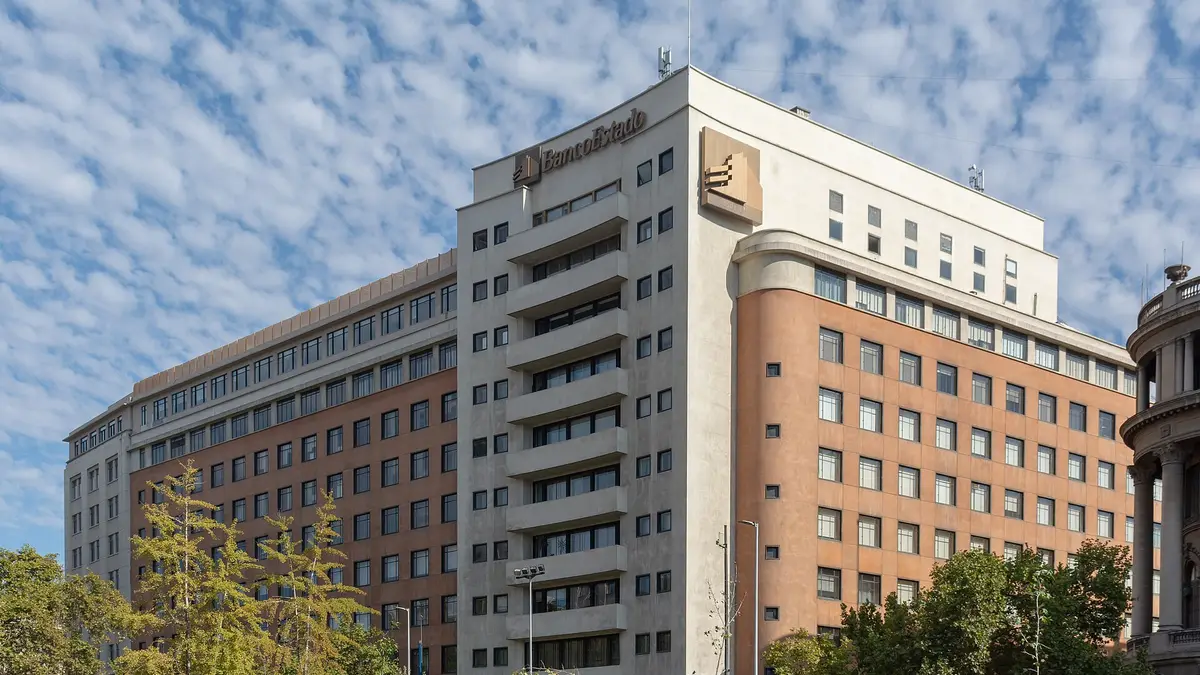
What changes for merchants and cardholders
- For cardholders, nothing immediate: cards keep working the same way; the sale changes the owner of the network that processes the payment, not the bank that issued your card.
- For merchants, competition is key: with several networks competing for clients, fees and terminal costs can be compared; we do so in the best card payment terminals.
- A buyer with its own network could merge them: that could concentrate the market again, something the FNE usually reviews.
You can see which of the three banks is largest by assets and loans in Chile's largest banks.
Frequently asked questions about the Transbank sale
Who is buying Transbank?
Banco de Chile, Bci and BancoEstado submitted non-binding offers. Shareholders reportedly have 45 days to choose.
How much is Transbank worth?
According to sources cited by Diario Financiero, between US$300 and US$400 million, compared with the roughly US$1 billion expected in 2023.
Who owns Transbank?
Banco de Chile (26.16%), Santander (25%), Scotiabank (22.69%) and Itaú, BancoEstado and Bci (8.72% each).
Does anything change when paying by card?
Not immediately. The sale affects the network that processes merchants' payments, not the cards or their terms.