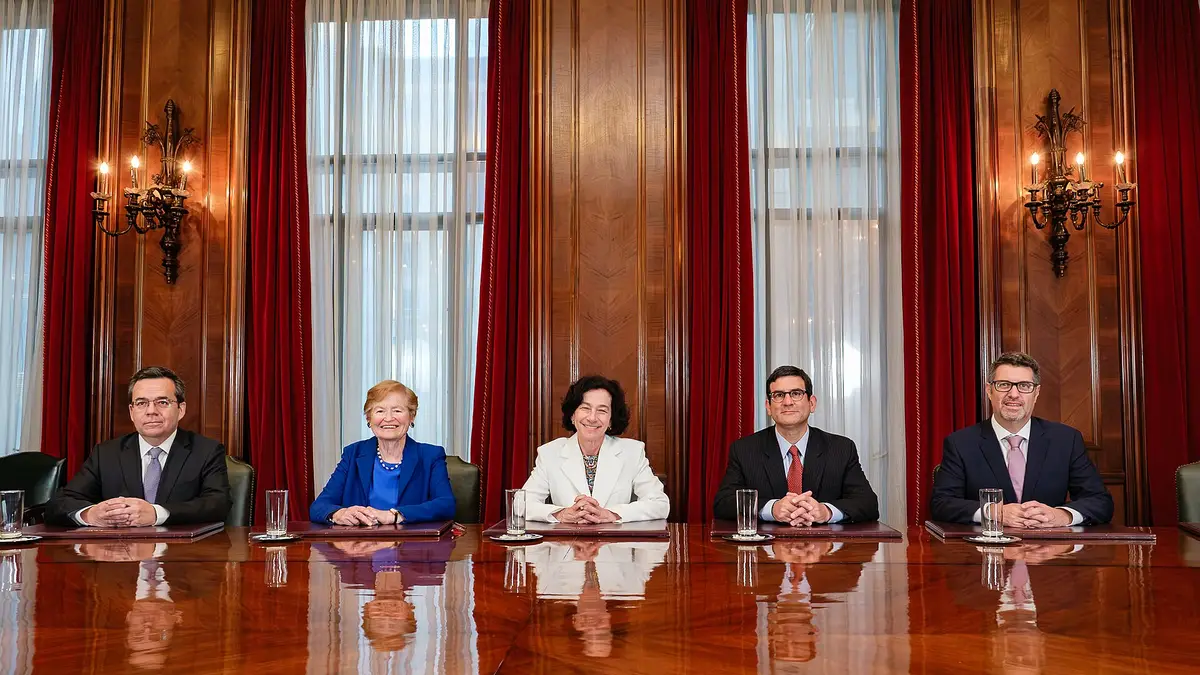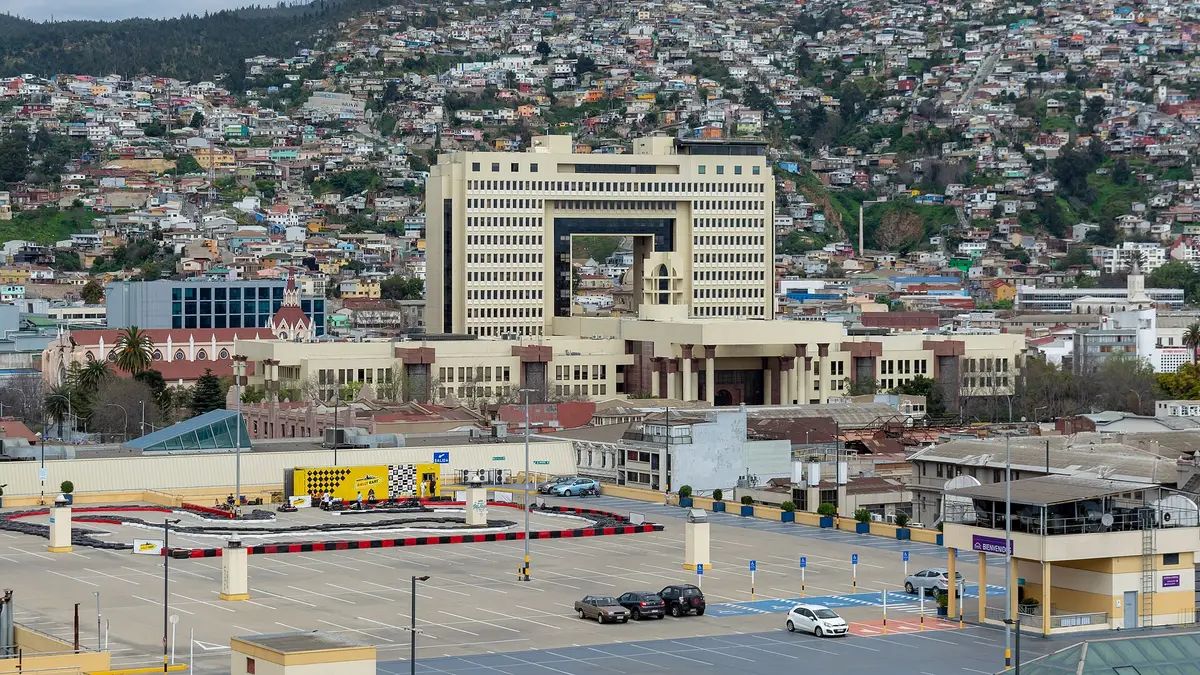
The floor of Chile's Chamber of Deputies begins the general vote on the 2027 Budget this Monday, November 9, and on Tuesday the 10th moves to the item-by-item debate (Emol). The bill provides for central government spending of CLP 91,175,816 million, about CLP 91.2 trillion and 23.7% of GDP, with real growth of 1.5% over expected 2026 execution, according to the Dipres, Public Finance Report, third quarter of 2026. It arrives with two entire items rejected by the Special Joint Budget Committee: Education and Science, Technology, Knowledge and Innovation.
View the data as a table
| Total spending | $91.18 trillion |
| Real growth vs. 2026 | 1.5% |
| Actual deficit | 1.8% of GDP |
| Gross debt at end-2027 | 42.5% of GDP |
2027 Budget: how much the state spends and on what
Finance Minister Jorge Quiroz described it as "a budget of moderate adjustment, of moderate spending growth" (Emol). The 1.5% figure is measured against what is expected to be actually spent in 2026 (CLP 89.79 trillion); compared with the 2026 Budget Law, the change is 2.7%, the Budget Office explains. With projected revenue of CLP 84.42 trillion, the actual deficit would be CLP 6.75 trillion (1.8% of GDP) and the structural deficit 1.8%, matching the target set in Fiscal Policy Decree No. 486.
| Spending type | 2026 close (CLP M) | 2027 bill (CLP M) | Real change | % of GDP 2027 |
|---|---|---|---|---|
| Personnel | 19,158,249 | 19,158,964 | 0.0% | 5.0% |
| Goods and services | 7,431,445 | 7,253,526 | -2.4% | 1.9% |
| Debt interest | 4,746,775 | 5,093,706 | +7.3% | 1.3% |
| Subsidies and grants | 28,926,601 | 29,856,773 | +3.2% | 7.8% |
| Pension benefits | 16,956,039 | 16,472,320 | -2.9% | 4.3% |
| Investment | 4,947,612 | 5,381,378 | +8.8% | 1.4% |
| Capital transfers | 7,456,072 | 7,925,860 | +6.3% | 2.1% |
| Total | 89,790,135 | 91,175,816 | +1.5% | 23.7% |
Source: Dipres, Public Finance Report, third quarter of 2026, table II.4.1. Millions of 2027 pesos. The "other" line (CLP 33,288 million) is not shown.
Interest payments rise 7.3% in real terms, to CLP 5.09 trillion, more than the total goods and services the state buys in a year. That is the cost of gross debt that the Budget Office estimates at CLP 157.5 trillion (42.7% of GDP) at the end of 2026 and CLP 163.6 trillion (42.5%) at the end of 2027, below the prudent level of 45%. To see how inflation makes UF-linked debt more expensive, read our article on October's CPI.
View the data as a table
| Gross debt | Prudent level | |
|---|---|---|
| 2026 | 42.7% | 45.0% |
| 2027 | 42.5% | 45.0% |
| 2028 | 43.5% | 45.0% |
| 2029 | 44.0% | 45.0% |
| 2030 | 44.0% | 45.0% |
| 2031 | 43.2% | 45.0% |

The priorities: security, the PGU pension and education
According to the Budget Office, the Security priority totals CLP 7.03 trillion, 9.1% more than in 2026: the Carabineros police grow 3.6% (to CLP 1.66 trillion), the PDI investigative police 7.4% and the prison service 17.9%. Children receive CLP 2.49 trillion (+4.1%). The Universal Guaranteed Pension (PGU), the state's largest program, has CLP 7.0 trillion for 2.2 million older people, 2.9% more; benefit details are in our 2026 PGU guide. Program spending on education reaches CLP 15.5 trillion and health grows 4.7%.
Does your company want to reach executives and decision-makers who follow Chile's economy? Advertise on Pauta Financiera.
See advertising optionsWhat the Joint Committee rejected in the 2027 Budget
The Joint Committee finished at 1:30 a.m. on Friday, November 6 and approved 32 of the 34 items (Emol). Education fell 22 votes to 2, once abstentions were added to the majority, amid controversy over the possible end of the "Yo elijo mi PC" laptop program. Science had already been rejected in subcommittee. Programs and chapters of other ministries were also rejected (Emol):
| Education | Entire item (only 123 reporting provisions remain) |
| Science and Technology | Entire item |
| Labor | Youth, Women's and Unified Employment Subsidies; five Sence programs |
| Finance | National Customs Service chapter |
| Interior | Senapred (disaster agency) chapter |
| Transport | Public Transport and Regional Connectivity Support Fund |
| Energy | Rural and Social Electrification; non-conventional renewables support |
| Public Treasury | Allocation to the INDH human rights institute (CLP 16,972 million) |
| Culture | Six memory institutions and the Monuments Council cut to CLP 1,000 |
In the labor area, according to the opposition, the three employment subsidies would fall from about CLP 194 billion to CLP 89 billion. The Constitution prevents Congress from increasing spending on its own initiative, so restoring what was rejected depends on proposals from the Executive, which has not committed to reinstating every program.
The calendar and the legal deadline
The bill was submitted on September 30. Article 67 of the Constitution gives Congress 60 days from submission to pass it; if it does not, the President's bill takes effect. That sets the deadline at November 29. After the Chamber, the text goes to the Senate and, if there are differences, to a joint committee.
- Sep 30, 2026Submitted to CongressPresented by Minister Jorge Quiroz and the Budget Director.
- Nov 6, 2026Joint Committee sends it onApproves 32 of 34 items; rejects Education and Science.
- Nov 9, 2026General vote in the Chamber
- Nov 10, 2026Item-by-item debateItems and Executive proposals.
- Nov 29, 202660-day deadline expiresIf no law has been passed, the President's bill takes effect.
On growth, the budget assumes GDP growth of 3.3% in 2027 and a copper price of US$5.65 in London, with mining output recovering. That recovery is weaker in Cochilco's figures: output would fall to its lowest level since 2003 this year, as we reported in our copper production article.
Revenue, deficit and debt: the numbers behind the 2027 Budget
The Budget Office projects that this year will close with an actual deficit of 1.8% of GDP, a point less than the 2.8% of 2025, and a structural deficit of 2.3%, better than the 2.6% target. For 2027, actual revenue would rise to CLP 84.42 trillion (21.9% of GDP). Because spending exceeds revenue, the Treasury will need CLP 24.67 trillion in financing next year, covered mainly by CLP 21.68 trillion in debt issuance and the use of CLP 2.17 trillion in financial assets saved in 2026 (Dipres, Public Finance Report, third quarter of 2026).
| Indicator | 2026 (projected close) | 2027 (bill) |
|---|---|---|
| Actual revenue | $80.66 trillion | $84.42 trillion |
| Total spending | $87.28 trillion | $91.18 trillion |
| Actual balance (% of GDP) | -1.8% | -1.8% |
| Structural balance (% of GDP) | -2.3% | -1.8% |
| Gross debt (% of GDP) | 42.7% | 42.5% |
| Assumed GDP growth | — | 3.3% |
| Reference copper price (US$/lb) | 4.47 | 5.37 |
Source: Dipres, Public Finance Report, third quarter of 2026, tables 2, 4 and II.3.2. 2026 spending in 2026 pesos and 2027 spending in 2027 pesos; that is why real growth (1.5%) cannot be calculated directly from these two figures.
View the data as a table
| Structural balance target | |
|---|---|
| 2026 | -2.6% |
| 2027 | -1.8% |
| 2028 | -1.7% |
| 2029 | -1.6% |
| 2030 | -1.5% |
For household budgets, what is at stake in the Chamber are concrete programs: the employment subsidies that young workers and women receive today, the PGU, which rises 2.9%, and public transport, whose Santiago subsidy grows 7.6% and the regional one 17.5%. The proposals the Finance Ministry submits this week will show which of the rejected programs return to the text.
Frequently asked questions about the 2027 Budget
How big is Chile's 2027 Budget?
Total central government spending is CLP 91,175,816 million (23.7% of GDP), 1.5% more in real terms than expected 2026 execution.
Which items did the Joint Committee reject?
Education and Science, Technology, Knowledge and Innovation in full, plus programs in Labor, Transport, Energy, Customs, Senapred, the INDH and Culture.
What is Congress's deadline?
60 days from submission on September 30, that is, until November 29, 2026.
How large will Chile's fiscal deficit be in 2027?
The Budget Office projects an actual deficit of 1.8% of GDP and a structural deficit also of 1.8%, the target of Decree No. 486.