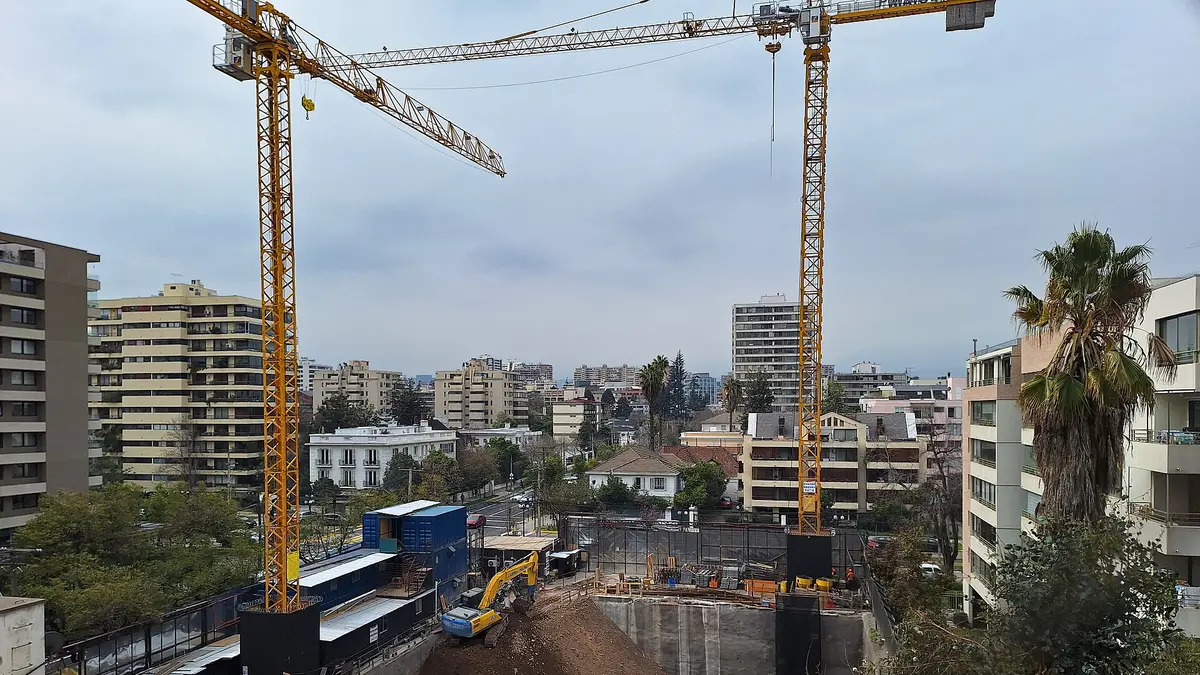
On Wednesday, November 18, the Central Bank publishes the national accounts for the third quarter of 2026, according to its Central Bank calendar, and the data come with a question hanging over them: is Chile in a technical recession? Finance Minister Jorge Quiroz has already said "it can technically be called a recession," while highlighting growth outside copper (Bloomberg, cited by Emol). The Central Bank Imacec figures allow an early read: based on July, August and September, seasonally adjusted activity would have fallen about 1.4% from the second quarter and 0.8% from the same period of 2025 (Pauta Financiera calculation).
View the data as a table
| Q1 2026 GDP vs. previous quarter | -0.3% |
| Q2 2026 GDP vs. previous quarter | -0.0% |
| Q3 2026 estimate vs. previous quarter | -1.4% |
| Mining Q3 2026 vs. a year earlier | -12.9% |
What a technical recession is and why Chile is close
A technical recession is said to occur when seasonally adjusted GDP falls for two quarters in a row compared with the previous quarter. It is not an official Central Bank definition but a rule of thumb used by analysts and the media. In Chile, GDP fell -0.3% in the first quarter of 2026 and was flat in the second (the Central Bank reports it as 0.0%; unrounded, the decline was 0.02%, according to Bloomberg, cited by Emol). Hence the debate: with official rounding there were not two declines, but with the exact figure there were.
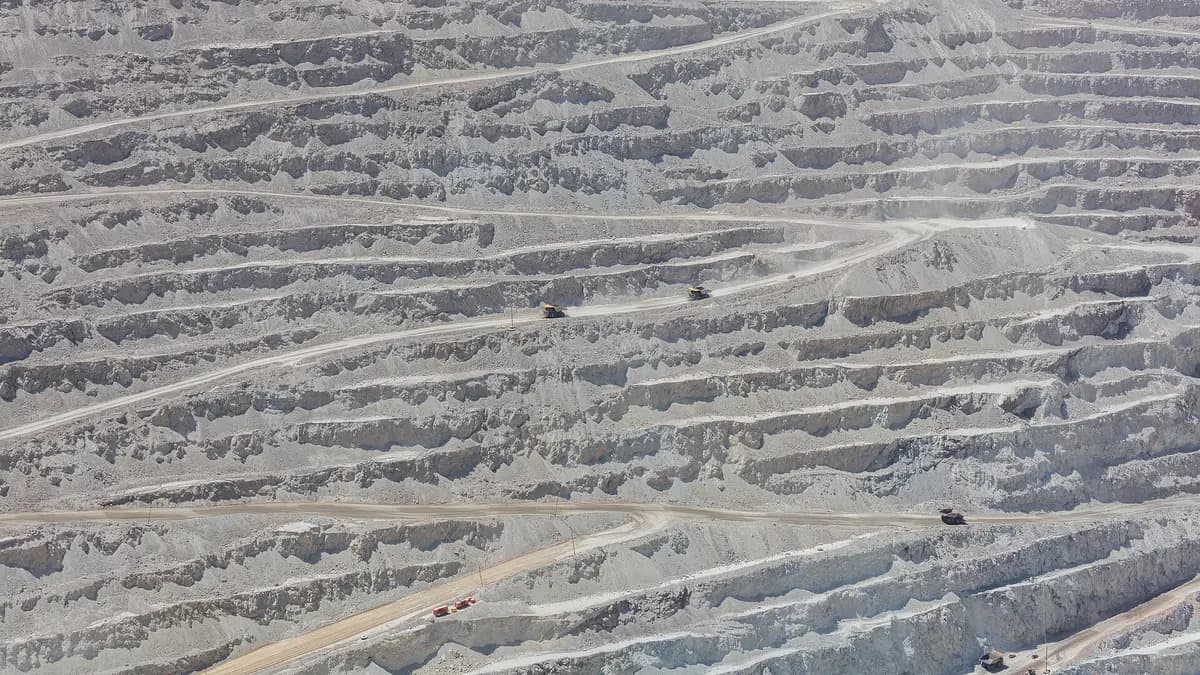
If a third-quarter decline is confirmed on Wednesday, Chile would have gone three quarters without growth compared with the previous quarter, something not seen in the Central Bank's seasonally adjusted series since 2013: previous streaks lasted two quarters (late 2016, 2019 and the second half of 2022). The July-September drop is mostly explained by mining: in the [seasonally adjusted Imacec](https://si3.bcentral.cl/Siete/ES/Siete/Cuadro/CAP_CCNN/MN_CCNN76/CCNN2018_IMACEC_03_A), the mining index fell from an average of 87.4 in the second quarter to 77.3 in the third, while non-mining went from 117.7 to 117.8.
View the data as a table
| Total Imacec | Non-mining | Mining | |
|---|---|---|---|
| Jan 2024 | 110.2 | 113.6 | 88.6 |
| Feb 2024 | 110.8 | 114.1 | 89.4 |
| Mar 2024 | 109.2 | 112.7 | 87.0 |
| Apr 2024 | 109.8 | 113.7 | 84.9 |
| May 2024 | 109.2 | 112.9 | 85.6 |
| Jun 2024 | 109.4 | 112.3 | 91.0 |
| Jul 2024 | 111.7 | 114.9 | 91.5 |
| Aug 2024 | 112.0 | 114.7 | 94.5 |
| Sep 2024 | 110.9 | 113.6 | 94.1 |
| Oct 2024 | 111.5 | 114.4 | 93.3 |
| Nov 2024 | 112.3 | 115.4 | 92.2 |
| Dec 2024 | 113.2 | 115.6 | 98.0 |
| Jan 2025 | 113.6 | 117.5 | 89.3 |
| Feb 2025 | 112.6 | 116.8 | 86.7 |
| Mar 2025 | 113.3 | 116.5 | 92.9 |
| Apr 2025 | 114.6 | 117.1 | 99.0 |
| May 2025 | 114.3 | 116.6 | 99.5 |
| Jun 2025 | 112.6 | 117.4 | 83.0 |
| Jul 2025 | 114.0 | 118.1 | 88.5 |
| Aug 2025 | 113.3 | 117.5 | 87.2 |
| Sep 2025 | 114.1 | 117.9 | 90.0 |
| Oct 2025 | 114.5 | 118.5 | 89.3 |
| Nov 2025 | 113.7 | 117.9 | 87.8 |
| Dec 2025 | 113.9 | 117.9 | 89.5 |
| Jan 2026 | 113.5 | 117.6 | 88.1 |
| Feb 2026 | 113.4 | 117.7 | 87.3 |
| Mar 2026 | 113.8 | 118.4 | 86.2 |
| Apr 2026 | 113.6 | 118.2 | 85.9 |
| May 2026 | 113.0 | 117.3 | 86.6 |
| Jun 2026 | 113.7 | 117.6 | 89.8 |
| Jul 2026 | 111.7 | 116.9 | 80.5 |
| Aug 2026 | 111.0 | 117.8 | 72.1 |
| Sep 2026 | 113.0 | 118.8 | 79.2 |
Q3 GDP: what the Imacec says month by month
Compared with 2025, the Central Bank Imacec fell 1.5% in July and 1.0% in August, and rose 0.2% in September, as we reported in the September Imacec. Over the quarter, mining plunged 12.9% while the rest of the economy grew 1.1%. Year-on-year GDP had already fallen 0.3% in the first quarter and 0.2% in the second (Central Bank).
| Month | Imacec, annual change | Mining | Non-mining |
|---|---|---|---|
| Jan 2026 | -0.9% | -1.0% | -0.8% |
| Feb 2026 | -0.2% | 0.5% | -0.2% |
| Mar 2026 | 0.1% | -7.4% | 1.3% |
| Apr 2026 | -1.0% | -12.8% | 0.7% |
| May 2026 | -1.4% | -12.7% | 0.3% |
| Jun 2026 | 2.0% | 8.2% | 1.2% |
| Jul 2026 | -1.5% | -9.3% | -0.3% |
| Aug 2026 | -1.0% | -17.4% | 1.4% |
| Sep 2026 | 0.2% | -12.1% | 2.0% |
Source: Central Bank Imacec, original series (change versus the same month of 2025, Pauta Financiera calculation from the published indices).
Does your company want to reach people who follow Chile's economy week by week? See Pauta Financiera's formats.
See advertising optionsWhat a technical recession means for your wallet
- It is not a broad-based crisis. The rest of the economy keeps growing; the decline is concentrated in copper, where Chile would produce 4.94 million tonnes in 2026, the lowest since 2003, as we detail in copper output.
- Rates and credit. A weak economy reduces pressure to raise rates; traders expect the policy rate at 4.5% for two years, according to the financial traders survey.
- The dollar. Weak GDP and falling copper put pressure on the peso: today the dollar returned to CLP 1,000.
- Expectations. Economists in the Central Bank's November Economic Expectations Survey expect 0% growth for 2026 and 3% for 2027, and Quiroz projects growth returning to about 4% in 2028 (Bloomberg, cited by Emol).
A caveat about the estimate: quarterly GDP incorporates more information than the Imacec and the Central Bank often revises previous months. For example, the first quarter was revised from -0.5% to -0.3% when second-quarter accounts came out, according to Emol. That is why the -1.4% is an approximation, not the official figure.
What economists expect for GDP in 2026 and 2027
The median of the Central Bank's November Economic Expectations Survey points to 0% growth for all of 2026 and 3% for 2027. For the year to end at zero, the fourth quarter would have to show a recovery, which depends mainly on mining leaving behind the operational problems at Escondida, Codelco and Spence. Economists consulted by La Tercera place the turning point in the second quarter of 2027.
| Quarter | Seasonally adjusted GDP (billion chained pesos) | Vs. previous quarter | Vs. a year earlier (original) |
|---|---|---|---|
| Q1 2025 | 53,722 | 0.88% | 2.9% |
| Q2 2025 | 54,090 | 0.69% | 3.7% |
| Q3 2025 | 53,851 | -0.44% | 1.7% |
| Q4 2025 | 54,057 | 0.38% | 1.6% |
| Q1 2026 | 53,920 | -0.25% | -0.3% |
| Q2 2026 | 53,912 | -0.01% | -0.2% |
Source: Central Bank, GDP table at previous-year chained prices; changes are Pauta Financiera calculations from the published levels. The table shows the decline started before 2026: the third quarter of 2025 had already fallen 0.44% from the previous one, and the late-2025 rebound did not last.
Frequently asked questions about Chile's technical recession
What is a technical recession?
Two consecutive quarters of decline in seasonally adjusted GDP compared with the previous quarter. It is a rule of thumb, not an official definition.
When is Q3 2026 GDP published?
On Wednesday, November 18, 2026, according to the Central Bank calendar.
Is Chile in recession?
It depends on the measure. GDP fell -0.3% in the first quarter and 0.02% in the second (0.0% rounded); the Imacec points to another decline in the third. Minister Quiroz said it can "technically" be called a recession (Bloomberg, cited by Emol).
Why is the economy shrinking if the rest is growing?
Because mining, which fell 12.9% in the third quarter according to the Imacec, weighs enough to subtract more than the rest adds. This article is informational and is not investment advice.