Chilean firms are still in a hard year. The November 2026 Business Perceptions Report (IPN), published by the Central Bank of Chile on Thursday, November 5, concludes that their performance remains below that of a year ago, with weak sales, narrow margins, high costs and persistent uncertainty. Even so, most keep favorable expectations for 2027.
The IPN is not a hard-numbers survey: it summarizes interviews with firms across the country, which the Central Bank uses as an early signal before official data arrive. That is why it is worth reading alongside the statistics: September's Imacec grew just 0.2% and unemployment reached 9.8% in the July-September quarter, the figure that weighs most on household budgets.
View the data as a table
| September Imacec | 0.2% |
| Mining | -12.1% |
| Unemployment | 9.8% |
| 24-month inflation expectation | 3.5% |
What the November Business Perceptions Report says
According to the Central Bank summary, reproduced by Diario Estrategia, firms report lower use of installed capacity and narrow margins. Adverse weather in the third quarter also hit results in some sectors and areas, especially in the north.
- Costs: higher fuel prices, linked to the Middle East conflict, made transport more expensive. Labor costs remain high, due to the higher pension contribution since August and the shorter working week.
- Prices: because of weak demand, firms have not been able to fully pass those costs on to prices.
- Employment: stable headcounts, with limited cuts in retail, restaurants and construction; nearly half say they have canceled or postponed hiring for the next 12 months, according to DF.
- Credit: demand eases slightly and the main use is still working capital, to cope with cash-flow pressure.
- 2027 investment: intentions stable versus a year ago, with more projects moving into execution, but some firms warn they could postpone them.
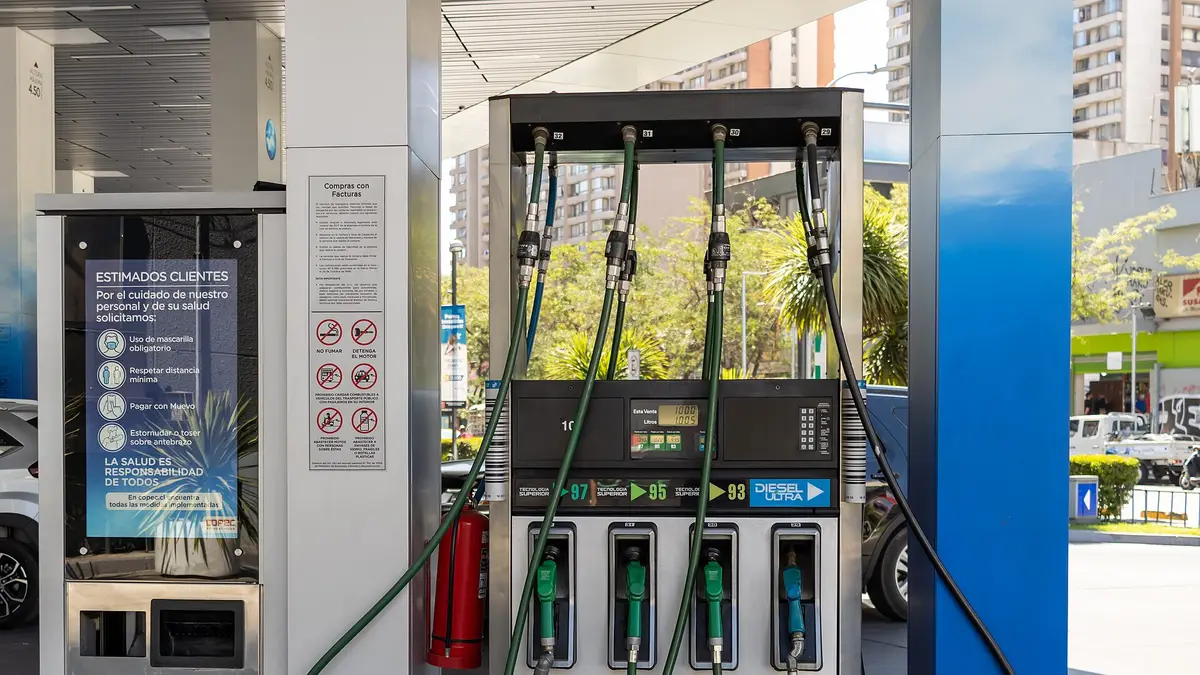
The fuel story changed in recent days: after the US elections oil fell sharply, as we reported in what the oil slump means for Chile. But the IPN interviews took place earlier, and firms say they have raised their fuel price assumptions in their plans because the conflict has dragged on.
For 2027, most investment projects will be the continuation of those already under way or the restart of paused ones, focused on new facilities or expansions, machinery and technology infrastructure. During 2026, by contrast, fewer firms invested than they had planned, according to DF. Firms base their optimism on a possible pickup in activity, the unblocking of projects and a recovery in employment.
North, center and south: how firms are doing by region
The Central Bank splits the report by macro-zones. The reading is similar across the country, with nuances, according to the DF summary:
| Macro-zone | Third quarter of 2026 | What they expect |
|---|---|---|
| North | Weak performance: narrow margins, high costs and adverse weather | Favorable medium and long term thanks to mining investment; caution in the near term |
| Center | Business below the year's projections, due to weak domestic demand | 2027 the same or better, but conditional |
| South | Mixed results, with weak demand and cost pressure | Improvement in the fourth quarter; caution for 2027, except some exporters and housing |
Source: Central Bank of Chile, November 2026 IPN, as summarized by Diario Financiero on November 5, 2026.
Does your company want to reach managers and entrepreneurs who follow the Chilean economy? Advertise on Pauta Financiera.
See advertising optionsWhat the Imacec and unemployment show
The hard data confirm what firms describe. September's Imacec grew 0.2% year on year, with mining falling 12.1% due to lower ore grades and temporary suspensions of operations, and the non-mining component growing 2.0%, according to the Central Bank. September had one more business day than a year earlier, which flatters the comparison. Third-quarter GDP will be released on November 18.
View the data as a table
| Imacec | |
|---|---|
| Sep 25 | 3.2% |
| Oct | 2.2% |
| Nov | 1.2% |
| Dec | 1.7% |
| Jan 26 | -0.1% |
| Feb | -0.3% |
| Mar | -0.1% |
| Apr | -1.2% |
| May | -0.9% |
| Jun | 2.4% |
| Jul | -1.5% |
| Aug | -1.0% |
| Sep 26 | 0.2% |
On jobs, the national unemployment rate was 9.8% in July-September, 1.3 points higher than a year earlier, according to INE, Chile's statistics agency. It is the flip side of what firms say in the IPN: stable headcounts, but few new hires. If you lost your job, check how much the unemployment insurance pays and how to claim it.
View the data as a table
| Unemployment | |
|---|---|
| Sep 25 | 8.5% |
| Oct | 8.5% |
| Nov | 8.4% |
| Dec | 8.1% |
| Jan 26 | 8.3% |
| Feb | 8.3% |
| Mar | 8.9% |
| Apr | 9.1% |
| May | 9.4% |
| Jun | 9.4% |
| Jul | 9.5% |
| Aug | 9.6% |
| Sep 26 | 9.8% |
| Indicator | Latest figure | Period | Source |
|---|---|---|---|
| Total Imacec | +0.2% y/y | September 2026 | Banco Central |
| Mining Imacec | -12.1% y/y | September 2026 | Banco Central |
| Non-mining Imacec | +2.0% y/y | September 2026 | Banco Central |
| Unemployment | 9.8% | July-September 2026 | INE |
| 12-month CPI | 4.5% | October 2026 | INE |
| Monetary policy rate | 4.5% | current | Banco Central |
Source: Central Bank and INE, data published between October 29 and November 6, 2026.
What it means for interest rates and your wallet
The Central Bank looks at the IPN to calibrate the monetary policy rate, currently 4.5%. The report gives it two opposite signals: weak demand and low hiring, which ease price pressure, and firms that expect higher-than-normal inflation over the next twelve months. The median 24-month expectation in September's EDEP survey rose to 3.5%, above the 3% target, according to the report summary. In October, all five board members considered raising the rate, as we reported in the minutes of the October meeting.
For households, the practical takeaway is that business costs are still pushing some prices up, as October's CPI showed, and that the labor market is weaker, which makes an emergency fund more important before taking on debt.
- Nov 5, 2026November IPNPerformance below expectations; 2027 favorable
- Nov 13 and 16Financial Policy Meeting
- Nov 17Financial Stability Report
- Nov 18Third-quarter GDP
- Dec 2026Last Monetary Policy Meeting of the yearRate currently 4.5%
Frequently asked questions about the Business Perceptions Report
What is the Business Perceptions Report?
It is a Central Bank of Chile report summarizing interviews and surveys of firms across the country on sales, costs, employment, prices and investment. It is published several times a year.
When was the November 2026 IPN published?
On Thursday, November 5, 2026.
Which costs worry firms most?
Fuel and transport, and labor costs, due to the higher pension contribution since August and the shorter working week.
What is unemployment in Chile?
9.8% in the July-September 2026 quarter, according to INE.